Joseph Olliver: Surveyor of India, Founder of a Dynasty (c.1785–1853)
Fourth great grandfather to Patience Jewell Whitty
Joseph Olliver was born in India around June 1785, of mixed European and Indian descent—what the records of his era called Eurasian or Anglo-Indian. The circumstances of his parentage remain uncertain. He may have been the natural son of Robert Oliver, a British soldier at Fort St George, Madras, or possibly the son of a Captain James Oliver commanding the 13th Madras Battalion of Native Infantry. Or, as intimated by the naming of his eldest son, was his father Thomas Olliver, likely a British subject serving in either a British military unit or in the East India Company Madras Army? His mother would have been Indian or Eurasian.
What is known is that by the time Joseph entered the historical record he was what was called an orphan. Even though his parents may well have been alive, he was taken from them, probably around age five, to be raised in orphanage schools and trained to do jobs the British East India Company deemed suitable for his station in life.
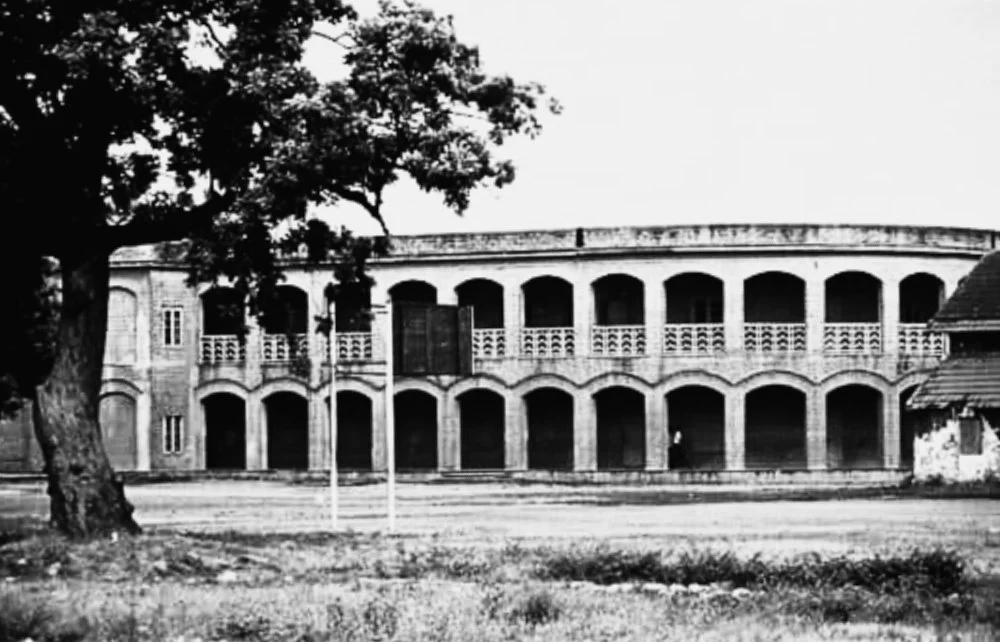
The Madras Military Orphan Society, where Joseph lived and learned starting from about the age of five years.
Hence Joseph ended up at the Madras Military Male Orphan Asylum, founded in 1798 in the Egmore Redoubt. It was the creation of the Reverend Doctor Andrew Bell, the same Bell whose ‘monitorial method’ of schooling would later influence education across Britain.
Joseph arrived there as a boy and was raised according to its strict daily schedule: prayers at dawn, breakfast at seven, school from eight until noon in reading, writing, arithmetic, book-keeping, geometry and navigation, dinner, school again until five, a supervised walk, supper, religious duties, and bed at eight.
The children were mostly Eurasian, and the institution reflected a particular colonial logic—that boys of mixed blood, fluent in local languages as well as English, better adapted to the climate, and cheaper to employ than European officers, might be shaped into useful instruments of Company rule.
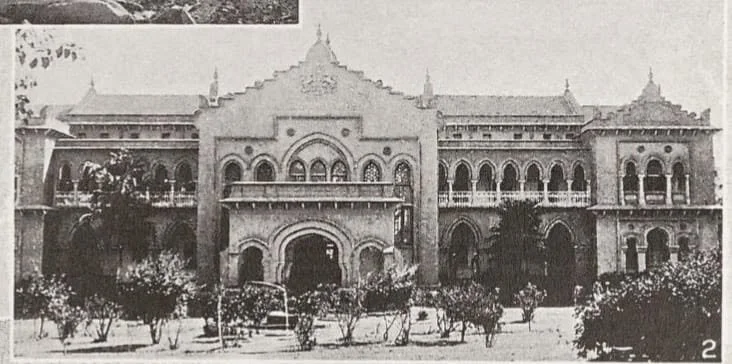
The Madras Revenue Survey School, where Joseph learnt engineering and surveying.
For the brighter boys, one of those useful instruments was a theodolite. From 1800 to 1804 Joseph was apprenticed to the Revenue Survey School in Madras—the oldest engineering school in India, founded in 1794, now the College of Engineering in Guindy.
The school fed directly into the Great Trigonometrical Survey, which Major William Lambton had begun measuring in 1802 from a baseline near St. Thomas Mount. The Survey aimed to connect the Indian subcontinent from sea to sea and would ultimately take nearly seventy years to complete—not the five years the East India Company originally estimated.

An account of the Trigonometrical Operations in crossing the peninsula of India, and connecting Fort St. George with Mangalore, William Lambton, 1811.
Joseph entered Lambton's orbit from the start. Between 1804 and 1806 he worked alongside Lieutenant Kater on the Survey's earliest triangulations, returning briefly to the Survey School when Kater departed, then rejoining Lambton in 1807, with Lambton finding him:
“...a young man of good behaviour, of promising talents... and hitherto exceedingly attentive to his duty.”
Over the decades that followed Joseph would rise to become Principal Sub-Assistant, the most senior non-commissioned role on the Survey. George Everest, who succeeded Lambton as Superintendent in 1823, called Jospeh Olliver his ‘right-hand man.’
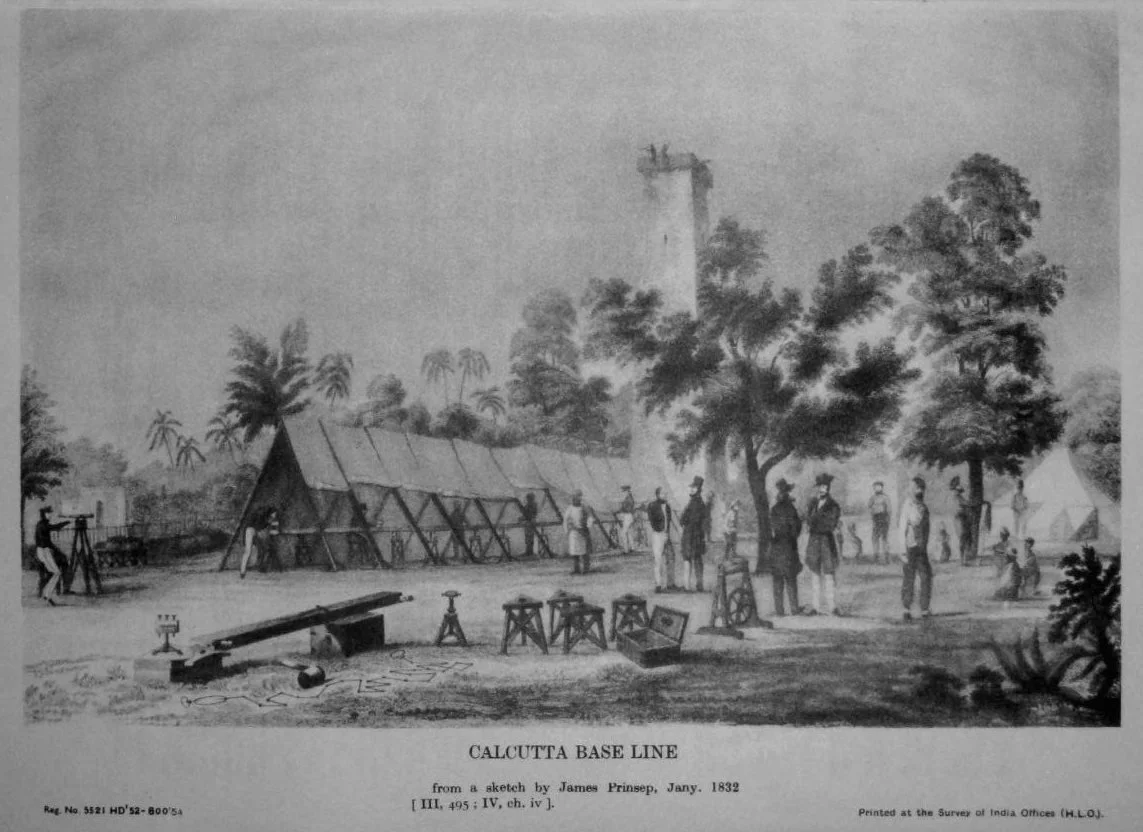
A field camp from the Calcutta Base Line, 1832. One of the figures is almost certainly Joseph Olliver. Based on a sketch by James Prinsep. This shows surveyors stretching a chain on coffers supported on pickets. The chain is housed under shade to reduce errors due to thermal expansion, and is aligned using a boning telescope.
The years 1825 to 1832 represent Joseph's most consequential work. While Everest returned to Britain for five years to recover from repeated bouts of tropical fever, Joseph led the extension of a longitudinal series of triangles from the terminal stations of the Great Arc near Sironj eastward to Calcutta, a distance of some 700 miles. A survey tower he built at Sukchar near Calcutta between 1825 and 1830 was the first observation point in 1832.
The official Account of the Operations of the Great Trigonometrical Survey described the achievement plainly: completed in about six years, at 112 miles per annum, through jungle, monsoon, and the constant ravages of fever, with branching series of secondary triangles spread across central India. It was one of the most sustained feats of practical surveying in the nineteenth century, accomplished almost entirely by Joseph Olliver without the Survey's celebrated Superintendent.
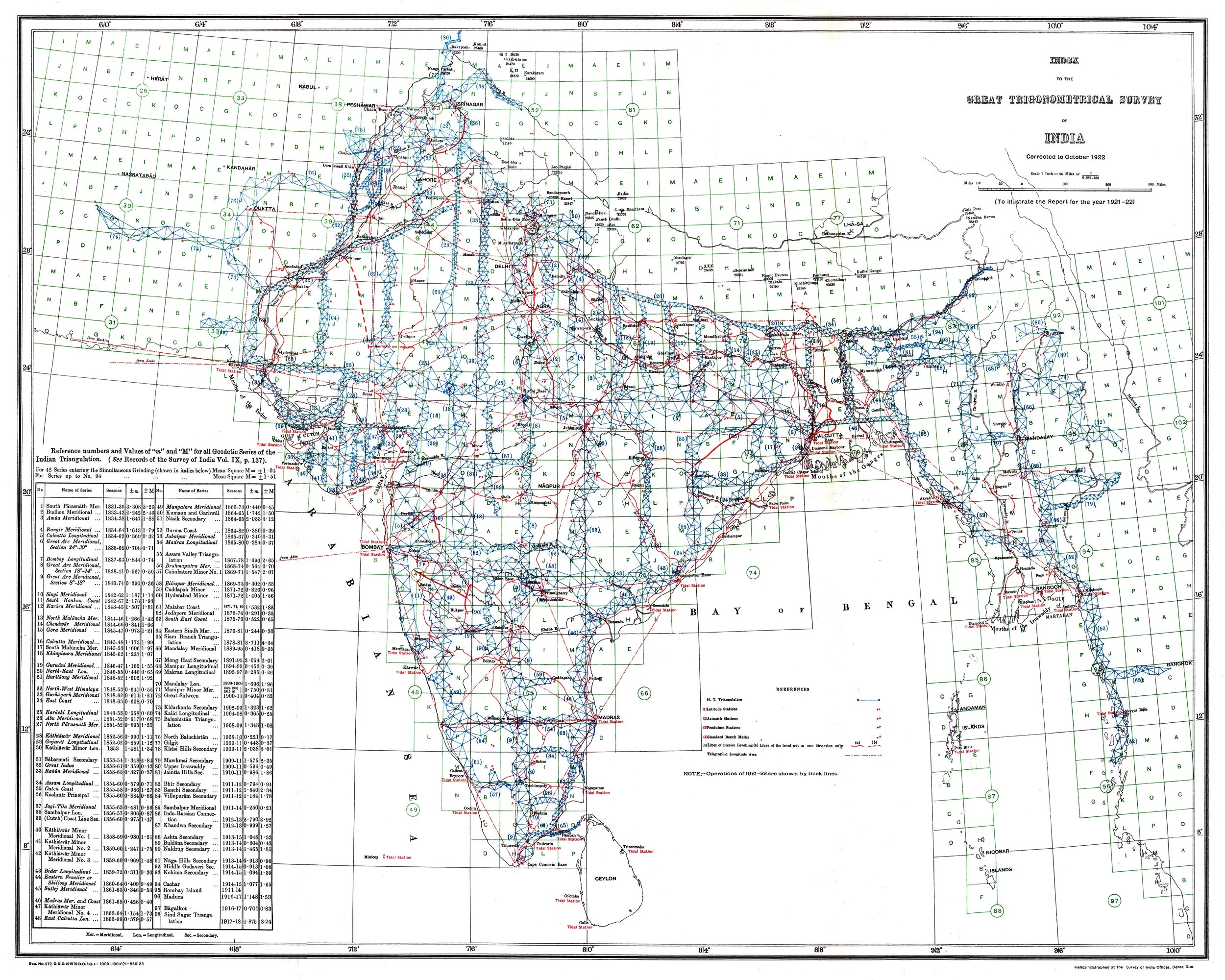
Index of the Great Trigonometrical Survey of India, the monumental undertaking of more than 70 years, the moon shot of its day.
In his personal life Joseph married twice. His first wife Magdelene Fonsa was a widow he wed in Hyderabad in January 1818. Together they had at least one son, Thomas Olliver. Shortly thereafter Magdelene died, perhaps in childbirth, and in December 1819 Jospeh married Mary Terry in Secunderabad. Together they had at least eight children: Joseph Arnold, Andrew Cornelius, Constance Matilda, Charles Adolphus, Mark Edwin, Henry Augustus, Helen Wilhelmina, and Caroline Grace.
Over time the Survey became, as one official history noted, something of a family affair. Joseph brought his teenage sons into the field, and Everest himself examined them and reported favorably: "Andrew Olliver, third son of Mr. Joseph Olliver, is very anxious to join his brothers in the field as a surveyor. He is a very shrewd and intelligent lad, of quick natural parts. I have not the least hesitation in recommending him." Tragically Joseph Arnold was killed at the age of nineteen by a fall from his horse while working in the field in December 1839.
“Andrew Olliver, third son of Mr. Joseph Olliver, is very anxious to join his brothers in the field as a surveyor. He is a very shrewd and intelligent lad, of quick natural parts. I have not the least hesitation in recommending him.”
Joseph retired in 1842, and in his last years declared his ambition to cultivate a garden.
In 1845 Joseph is mentioned in a record in the Bengal Catholic Herald noting that he donated four shillings to the Irish Relief Fund—a small but telling gesture made at the height of the Irish Famine and Genocide by an Anglo-Indian pensioner with no obvious personal connection to Ireland, but with perhaps some feeling for people dispossessed by colonial indifference.
Joseph died on 1 November 1853 at Barrackpore, Bengal, aged about sixty-eight. The Survey of India, to which he gave the better part of four decades—his entire working life—would continue for another twenty years after his death. Eventually it measured the height of the Himalayan peaks, proving that what the British called Peak XV was the highest mountain on Earth.
The mountain was later named for George Everest, Joseph’s boss. Meanwhile the men who built the towers, laid the triangles, fought the fevers, as well as the understandably defensive tribal peoples of India’s forests and mountains, through decades in the jungles went mostly unremembered.
Joseph Olliver is one of the few whose name survives.

Surveying theodolite.