Rebecca Williams Bromley: Eurasian Daughter of the Indian Cantonments (1827-1900)
Second great grandmother to Patience Jewell Whitty
Rebecca Williams was born on 6 July 1827 in Neemuch, a garrison town in the Bengal Presidency of the East India Company. The name was a backronym for an existing village, which the British then retroactively created as an acronym—the North India Mounted Artillery and Cavalry, or NIMUCH.
The cantonment was established by the British in 1817–1818 in the immediate aftermath of the Third Anglo-Maratha War, at an outpost within the princely state of Gwalior. Here the land was flat enough for them to lodge their sizable horse artillery batteries and cavalry regiments.
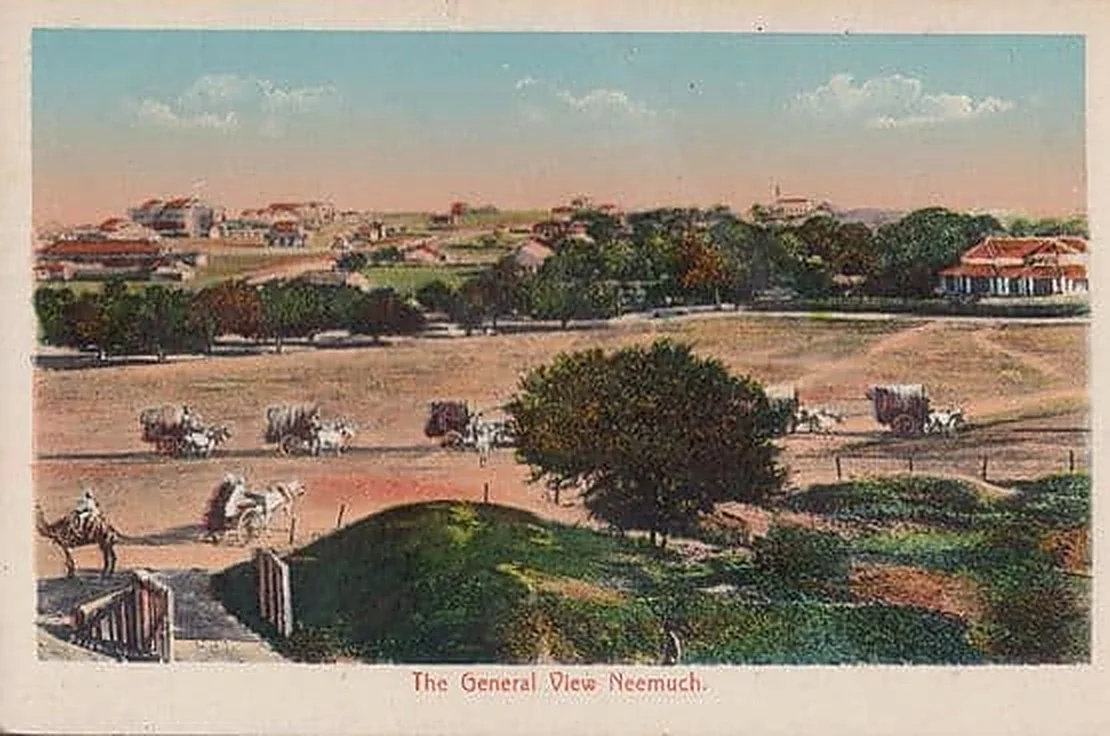
Old Neemuch.
Hence Rebecca was born inside the machinery of British military occupation. Her father was John Williams, whose trade on her birth record was listed as a “Drummer with the 31st Bengal Native Infantry.”
The 31st was one of the many units of the British East India Company’s enormous armies. His job as a drummer reveals his Eurasian heritage, since virtually all military bandsman within the Company’s system were Eurasians (later known as Anglo-Indians)—born from unions between British soldiers and Indian or part-Indian women, or simply between Eurasian men and Eurasian women.
On Rebecca’s baptism record her mother is noted only as Anna, maiden name unrecorded.
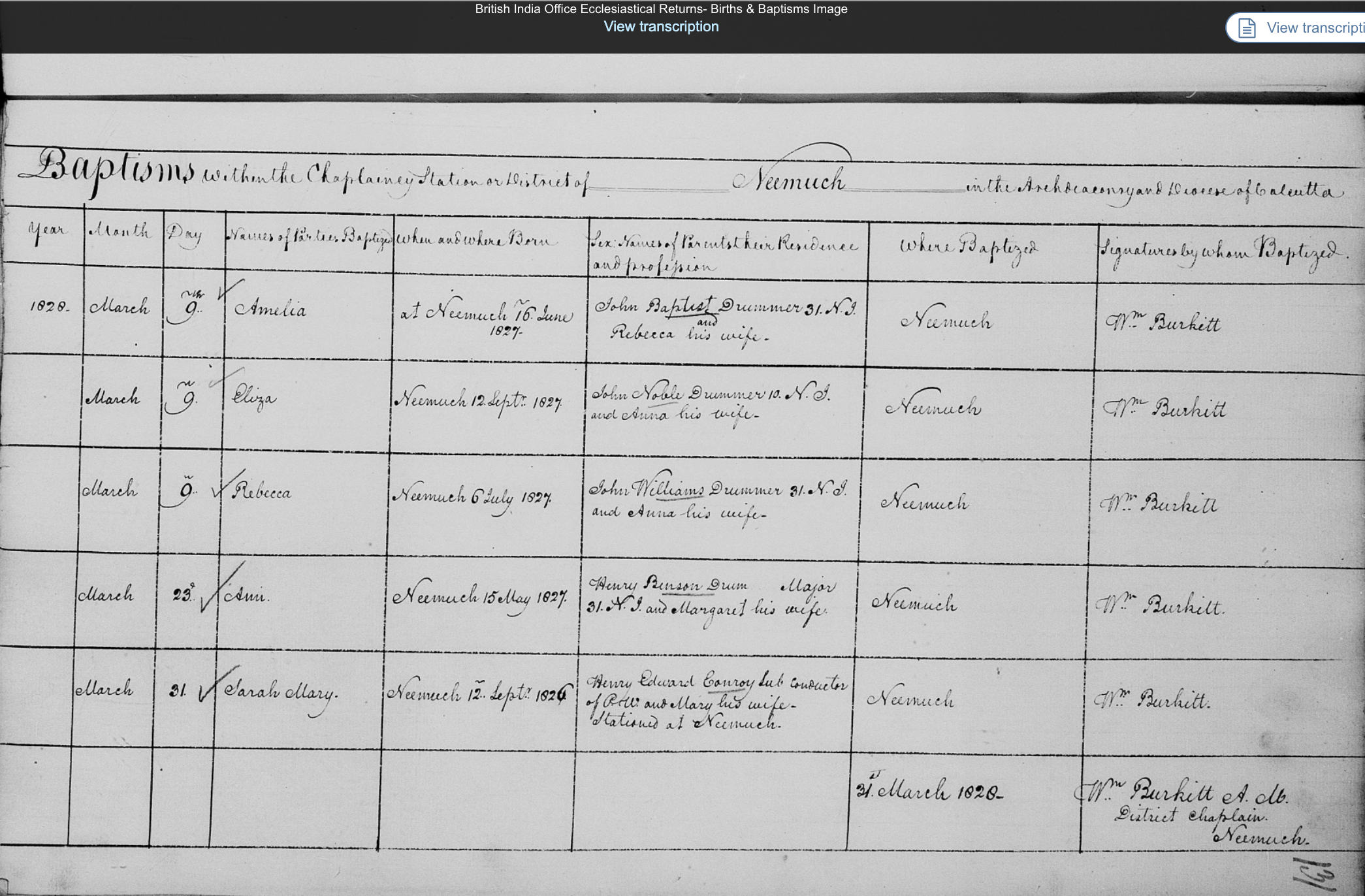
Rebecca Williams birth record in Neemuch, Bengal Presidency, India.
The Eurasian community occupied a distinct and difficult social position in nineteenth-century colonial India. They were generally barred from the senior ‘covenanted’ ranks of the civil service and military officer corps, whose positions were reserved only for men born in Britain or Europe.
Instead the Eurasian community filled a specific set of ‘uncovenanted’ occupational niches that the colonial system depended on but did not fully embrace. These included military bandsmen, medics (though not doctors), assistant apothecaries, and later railway guards, telegraph operators, and subordinate police.
Rebecca was married off at age fifteen—not an unusual age for Eurasian women of her class and era to wed—possibly in an arranged marriage between herself and an older bandsman. Whether it was her choice or not, on 13 July 1842 Rebecca married John Bromley, a twenty-two-year-old trumpeter in the 1st Troop, 1st Brigade of the Bengal Horse Artillery.
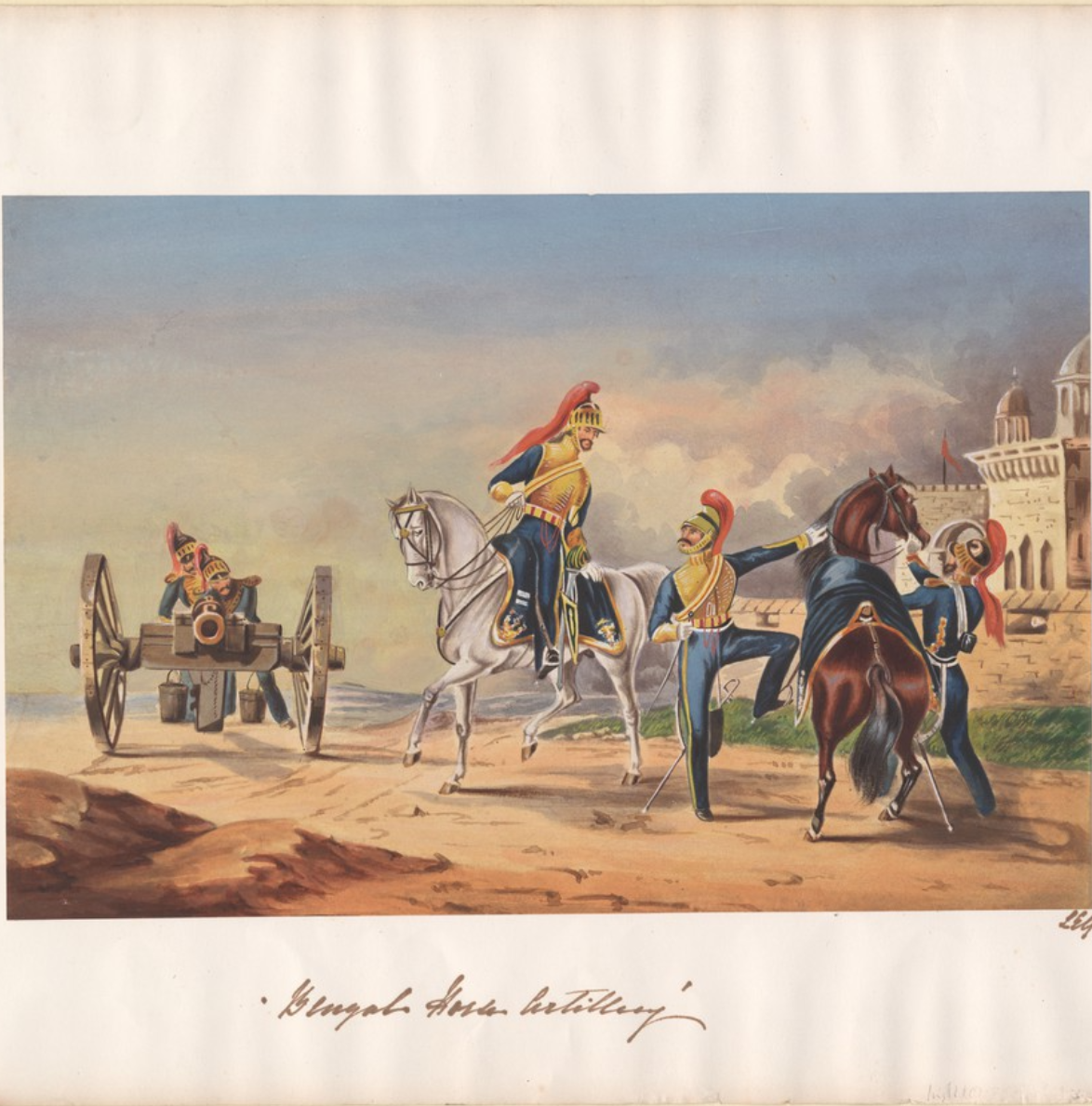
This was one of the most celebrated units in the East India Company's Bengal Army, renowned for their discipline and ferocity and not a little for their splendid uniforms of leopard-skin-crested helmets with long horse-tails of flaming red hair. The sight alone was said to instill fear in all who faced them.
In his memoir Forty One Years in India, Lord Roberts described his first encounter with the Bengal Horse Artillery in 1852:
“From Cawnpore I went to Meerut, and there came across, for the first time, the far-famed Bengal Horse Artillery, and made the acquaintance of a set of officers who more than realized my expectations regarding the wearers of the much-coveted jacket, association with whom created in me a fixed resolve to leave no stone unturned in the endeavour to become a horse gunner.
”Like the Cavalry and Infantry of the East India Company’s service, the Artillery suffered somewhat from the employment of many of its best officers on the staff and in civil appointments; the officers selected were not seconded or replaced in their regiments. This was the case in a less degree, no doubt, in the Horse Artillery than in the other branches, for its esprit was great, and officers were proud to belong to this corps d’elite.
”It certainly was a splendid service; the men were the pick of those recruited by the East India Company, they were of magnificent physique, and their uniform was singularly handsome. The jacket was much the same as that now worn by the Royal Horse Artillery, but instead of the busby they had a brass helmet covered in front with leopard skin, surmounted by a long red plume, which drooped over the back like that of a French Cuirassier. This, with white buckskin breeches and long boots, completed a uniform which was one of the most picturesque and effective I have ever seen on a parade-ground.”
In their married life together Rebecca and John moved through a string of garrison postings across the United Provinces: Ludhiana, where their daughter Mary was born in 1845, and Chunar on the Ganges, where Samuel, Rebecca, and Julia were born between 1847 and 1853. Each birth was another entry in the long ledger of garrison-town parish registers that mark the Eurasian community's presence across northern India.

Watercolor painting of the North view of the fort of Chunargarh (Chunar) on the Ganges, as seen from across the river. The painting is inscribed on the back: "From a Painting by Daniels".
Rebecca’s fate was likely tied to the Indian Rebellion of 1857 (also called the Indian Mutiny of 1857), since it was around that time that her husband John Bromley disappeared from the records.
While some sepoy regiments of the Bengal Horse Artillery mutinied, the European gunners held firm and the horse artillery troops went on to become the mobile strike force of nearly every relief column and siege that followed. Most famously they hammered the rebel lines at Badli-ki-Serai and through the long Siege of Delhi that summer.
For their part, Eurasian bandsmen and medics stayed loyal to the East India Company’s Bengal Army.
Such reliability came at a cost though—junior officers and gunners of the Horse Artillery were killed in action at the Hindan river, before Delhi, and in the massacres at Cawnpore in numbers disproportionate to their small size.
It’s possible, perhaps likely, that John Bromley died or was disabled in one of these or a similar engagement. Whether the upheaval directly touched Rebecca’s family isn't known, but no Eurasian family living in the garrison towns of the United Provinces in 1857-1858 could have been untouched by it.
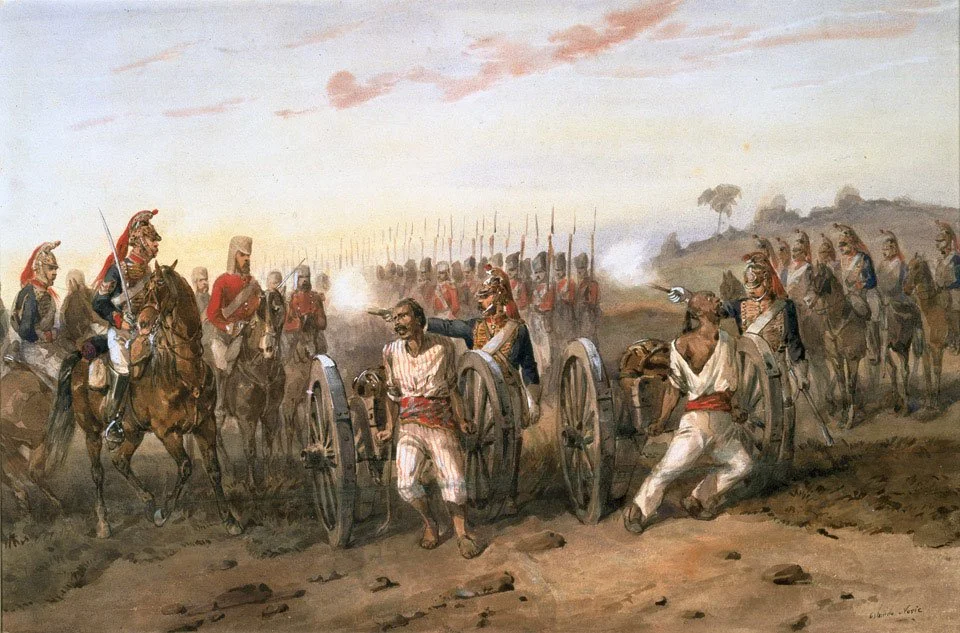
Mutineers About to Be Blown From Guns By the Bengal Horse Artillery, 1858. Watercolour by Orlando Norie (1832-1901). The Bengal Horse Artillery was immortalized in one of its most infamous roles in the Indian Rebellion/Mutiny in this painting showing captured mutineers about to be blown from the cannons. The British wholeheartedly endorsed this Mughal practice, as much a form of psychological torture as execution, since the obliteration of the body was believed by both Hindus and Muslims to deprive them of life in the afterlife.
By July 1858 Rebecca had given birth to another daughter, Matilda, whose father was not John Bromley, but James Keegan, a man seven years Rebecca’s junior. Was Rebecca still married to John Bromley? Was this a case of abandonment—or widowhood?
Whatever the actual case, Julia would have one more child with James, Lizzie Lucretia Keegan, born in 1861, before the couple formally married in Benares (Varanasi) in July 1865. By 1867 their third and last known child together, James William Keegan, was born in Allahabad.
James Keegan's occupation reflects the next great transformation of colonial India: the railway age. His marriage record lists him as a "Guard with the E.I. (East India) Railway," the line that was then rapidly extending its track from Calcutta through Benares, Allahabad, and Cawnpore.
This was a sign of Britain rebuilding its grip on northern India in the Rebellion's aftermath—a grip enforced as much by rail and telegraph as by the sword. Later in life James Keegan moved into the North-West Provinces and Oudh Police, another of the ‘uncovenanted’ posts that absorbed Eurasian men in large numbers.
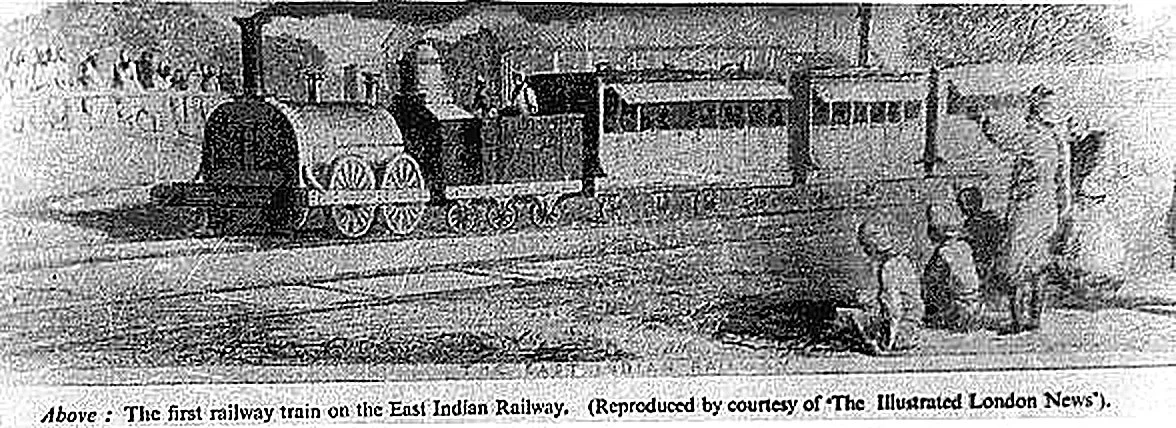
The first train on the East Indian Railway, 1854.
Rebecca outlived her second husband by three years, dying of chronic cystitis (UTI) in Cawnpore on 15 January 1900 at the age of seventy-two. She had spent her entire recorded life inside a network of British Indian garrison towns and railway junctions, married twice to men whose occupations—military bandsman and railway guard—were themselves markers of the particular, constrained place the Eurasian community held in the colonial order.
Rebecca holds one further distinction. She is earliest link identifiable by name in the long chain of mitochondrial DNA (mtDNA) that leads back at least 50,000 years or more in South Asia. Her haplogroup—M42b1a3a—came from her mother, Anna ‘Unknown’, who was possibly an Indian woman.
That same mitochondrial DNA passed virtually unchanged from the mothers to their children (though it can only be passed on by daughters). Anna’s mtDNA, is an incredibly rare, deeply ancient maternal lineage that culminates in Patience Jewell’s daughter, who had no daughters of her own and therefore marks the end of this venerable line of Indian mothers.