Titus Adshead: A Rogue & Vagabond In the London Rookeries (1741- ?)
Fourth great grandfather to Mark Stephens Whitty
Titus Adshead was born on 9 January 1741 and baptized at St Chad's, Shrewsbury, the son of Timothy Adshead and Anne Littlehales. He carried a surname rooted in a small place-name near Prestbury, Cheshire, a lineage confirmed by his own grandfather's origins in Manchester.
Titus's father Timothy died young, in 1742, when Titus was barely a year old, leaving him fatherless from infancy in a Shropshire county town still living on the fading remnants of its medieval wool trade.
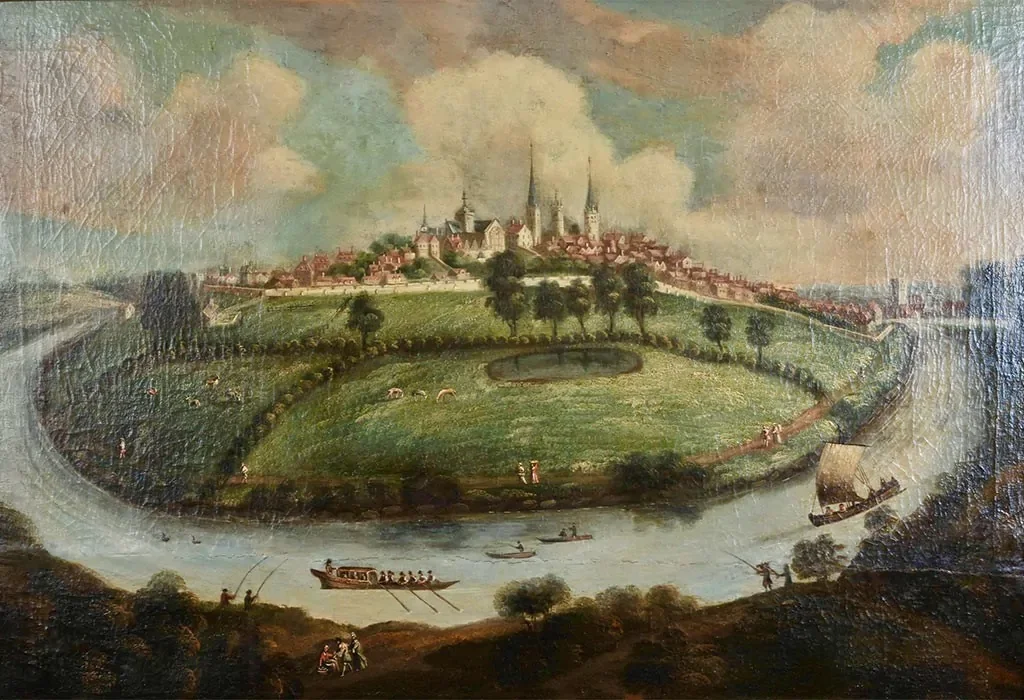
Shrewsbury on the River Severn, artist unknown.
As a young man, Titus was bound apprentice for seven years to William Blakeway, a tailor in St Chad's parish, Shrewsbury. This was the standard route into a skilled trade for a boy of his class in Georgian England, typically arranged through a formal indenture that bound master and apprentice together for the better part of a decade.
But Titus's own sworn testimony—recorded decades later—states plainly that he served only three and a half years before being discharged. Along with an incomplete apprenticeship went any guarantee of trade credentials and a guild standing. Why was he discharged? Perhaps his master died or his business failed? Perhaps Titus was an unsatisfactory pupil?
At this time Shrewsbury served as the primary finishing and trading hub for ‘Welsh plains,’ a coarse woolen cloth in demand in London and overseas. Whatever led to the end of Titus’ apprenticeship, by 1762, at age twenty-one, he had followed the Welsh Cloth Trade route to London, probably hoping to complete his tailoring training.
That year he married Elizabeth Berry at St Margaret's, Westminster. He had become part of the steady current of young provincial men and women drawn to the capital's far larger, faster-moving, eighteenth-century economy.
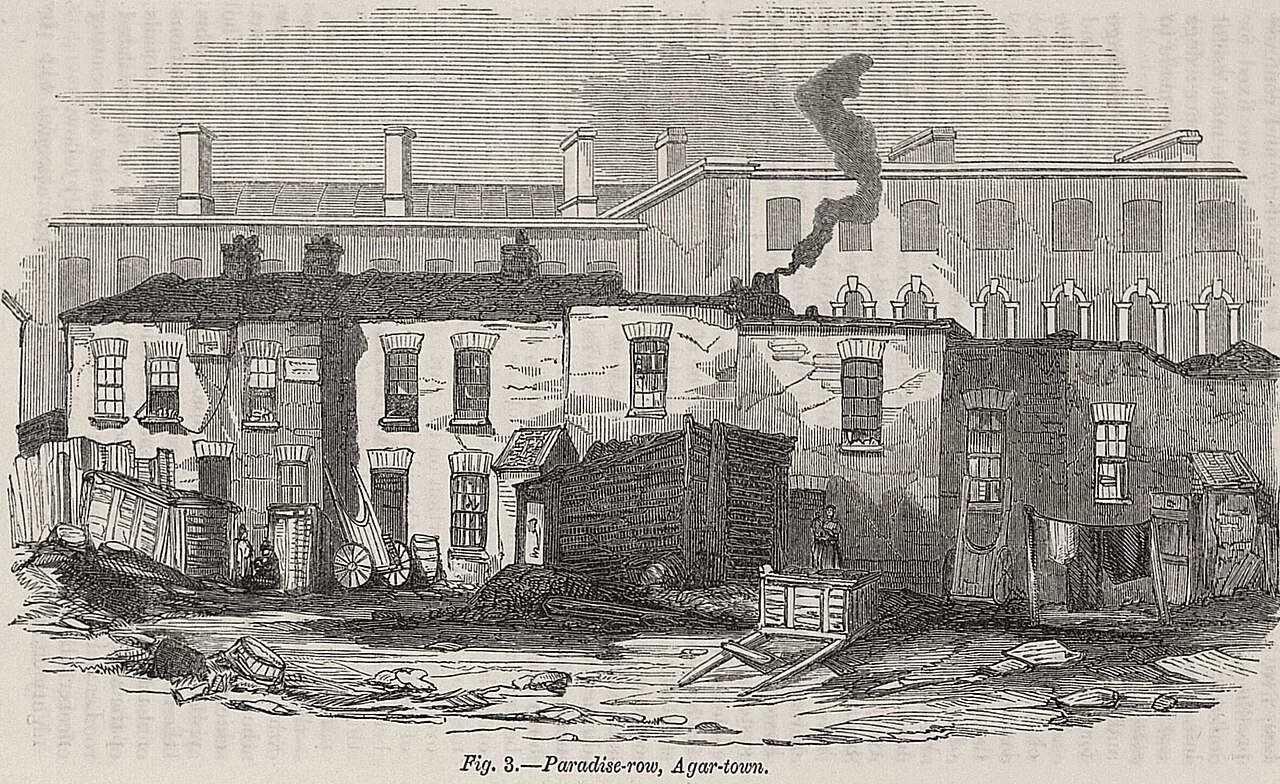
A London ‘rookery’, the 18th century slang word for a slum, likened to the huge, noisy colonies made by crow-like birds called rooks. Rook was also a name for a thief or swindler.
London was absolutely teeming at this time, bursting at the seams with its growing population. Massive wealth inequality allowed some to live in enormous opulence, while most suffered in the chaotic, dirty, disease-ridden, and crime-filled slums known at the time as rookeries for their resemblance to the noisy bird colonies.
Titus and Elizabeth went on to have at least seven children together: Anne, Timothy, Jane, Susannah, Elizabeth, Joseph, and Samuel, born across various London parishes over the following two decades. How Titus supported his family at this time is unknown. Probably, like so many others in the rookeries, he cobbled together a subsistence living of small jobs and petty crime.
But the marriage record isn't what makes Titus's story so fascinating. It's what happened eleven years later on 18 October 1773. Titus was apprehended in Westminster and formally examined under England's vagrancy laws as a ‘Rogue and Vagabond,’ a legal category the eighteenth century applied broadly to the wandering and unsettled poor.
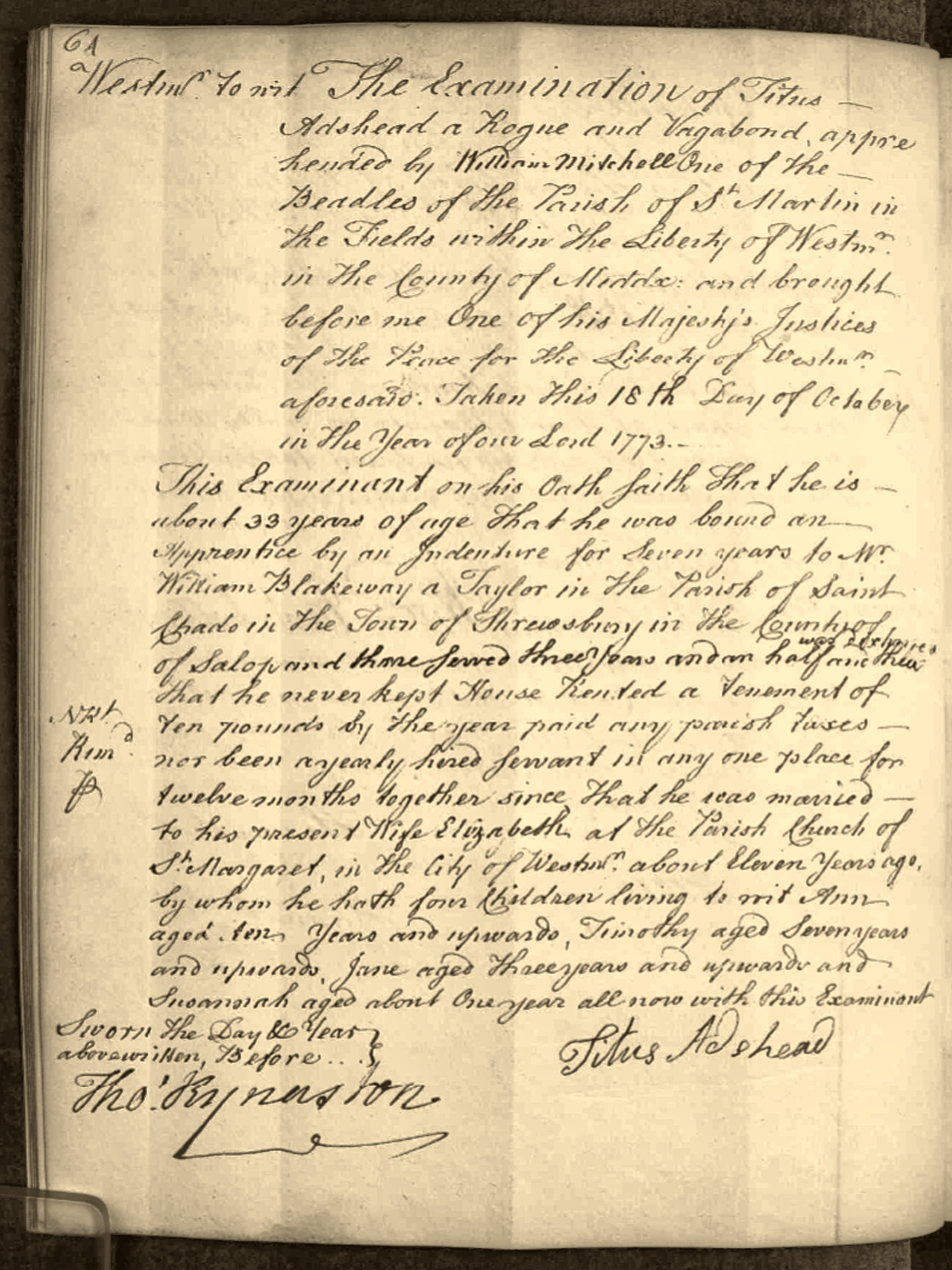
Titus’ own sworn examination survives nearly verbatim. In it he stated that he was about thirty-three years old, that he had never rented a ten-pound tenement by the year, or paid parish taxes, or held a single hired position for a full year altogether. These were the precise legal tests Georgian parishes used to determine a person's official ‘settlement,’ or citizenship in a parish.
Without one or more of these signs of permanent residency, the parish considered Titus an outsider, thereby legally clearing itself of any obligation to support him and his family (via a workhouse) if they fell into poverty.
Having never met that bar in Westminster, and with an apprenticeship in Shrewsbury he'd never finished, Titus occupied exactly the kind of administrative no-man's-land that the Poor Law examination system existed to sort out. Parishes had every financial incentive to prove a pauper's legal home lay elsewhere, so the burden of relief could be shifted off their own rates.
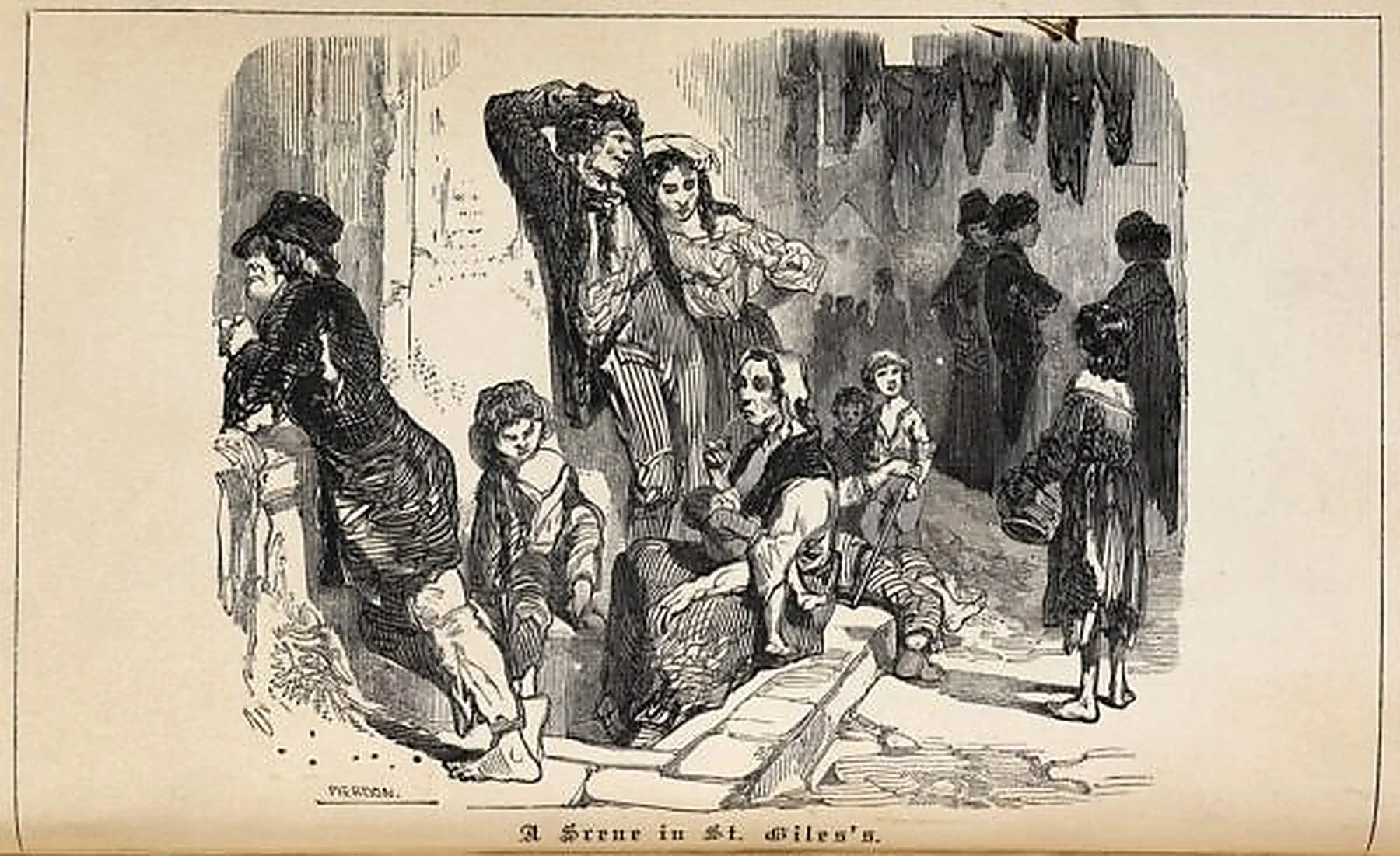
London slums.
Four of his children—Ann, ten, Timothy, seven, Jane, three, and Susannah, one—were named in the examination as living with him at the time, underscoring just how much was riding for one household on the outcome of that legal proceeding.
What became of Titus and his family in the end is unknown. Most likely he faded back into the London rookeries, although he likely kept his head down and avoided Westminster going forward.
His son Timothy Adshead eventually married in London, and on his marriage record his profession was listed as ‘Taylor.’ Titus’ granddaughter Elizabeth Adshead, daughter of Timothy, was also born in London, became a seamstress, eventually fell into crime herself, was tried and convicted at the Old Bailey and sentenced to death before her sentence was commuted to ‘Life Beyond the Seas’ in Australia.
One detail in Titus’ examination cuts against the ‘vagabond’ label the law pinned on him. He signed his own testimony in his own hand. In an era when a large share of the London poor could only make their mark, Titus’ signature was evidence of a man with a real if incomplete trade education, caught by economic circumstance, very possibly the severe credit crisis that struck London's economy in 1772, only a year before his examination.
Perhaps Titus was a rogue and a vagabond in the eyes of the law only and in the circumstances of his time and place, rather than through any lack of skill, education, or moral standing of his own.