Thomas William Baillie: Point Man for Sir Thomas Raffles in Sumatra (c.1787- ?)
Third great grandfather to Patience Jewell Whitty
Thomas William Baillie was born in Calcutta circa 1787, one of at least five sons of Dr. William Baillie, a surgeon in East India Company service. Thomas’ father died in 1795 in Berhampore, India—leaving young Thomas and his brothers effectively orphaned in Calcutta, their mother's identity never recorded.
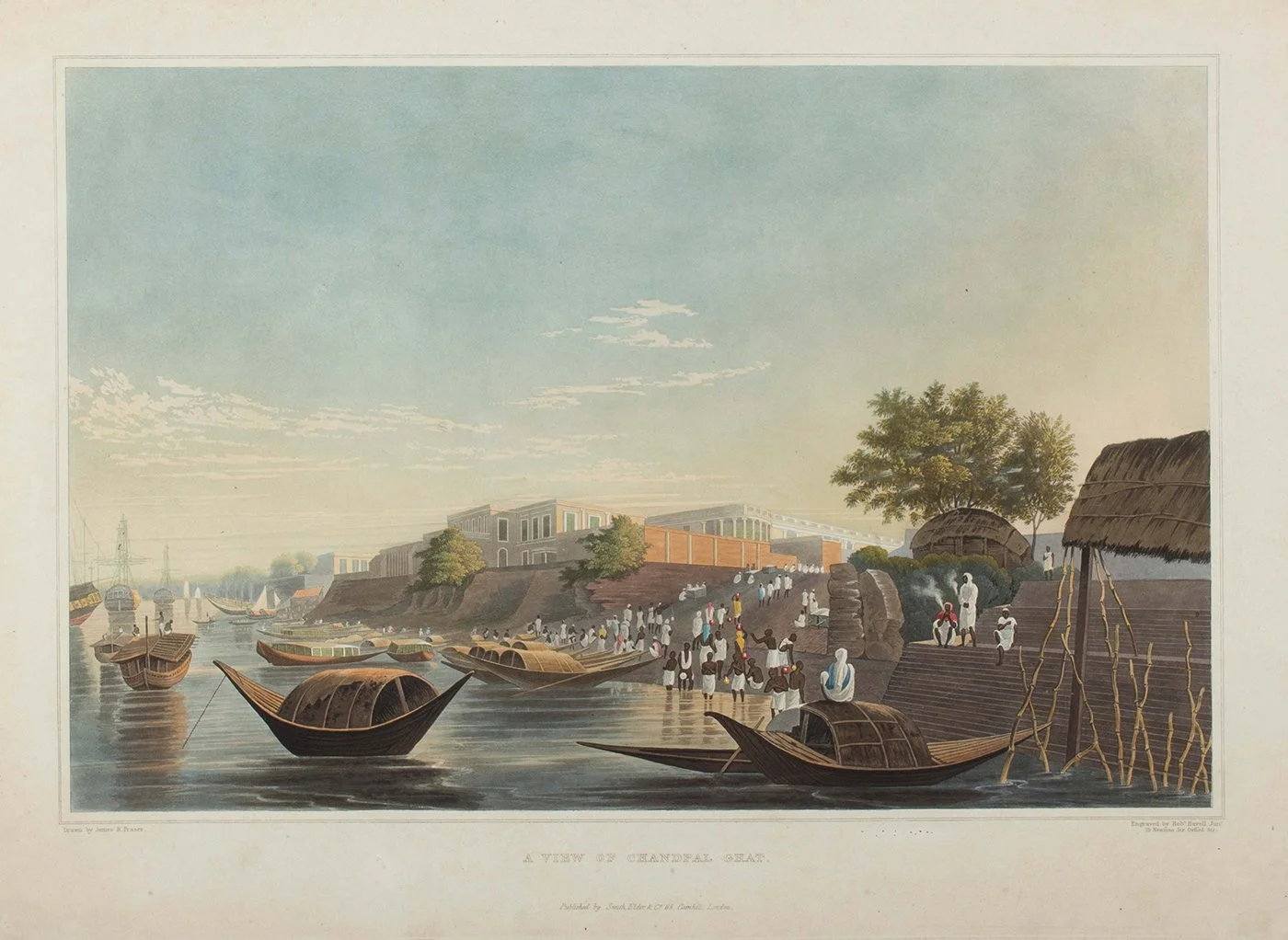
Old Calcutta.
Thomas was not baptized until January 1798, at the unusually late age of ten, according to the baptism record. His father was by then already listed as deceased on the baptismal register.
Was Thomas European or Eurasian? Almost certainly the latter as few European women were present in India at that time.
By the early 19th century Thomas left Bengal altogether for a far more obscure and dangerous corner of the East India Company's empire: Fort Marlborough at Bencoolen on the southwest coast of Sumatra. There he began his career as a Monthly Writer—the lowest rung of the Company's civil service, essentially a junior clerk.
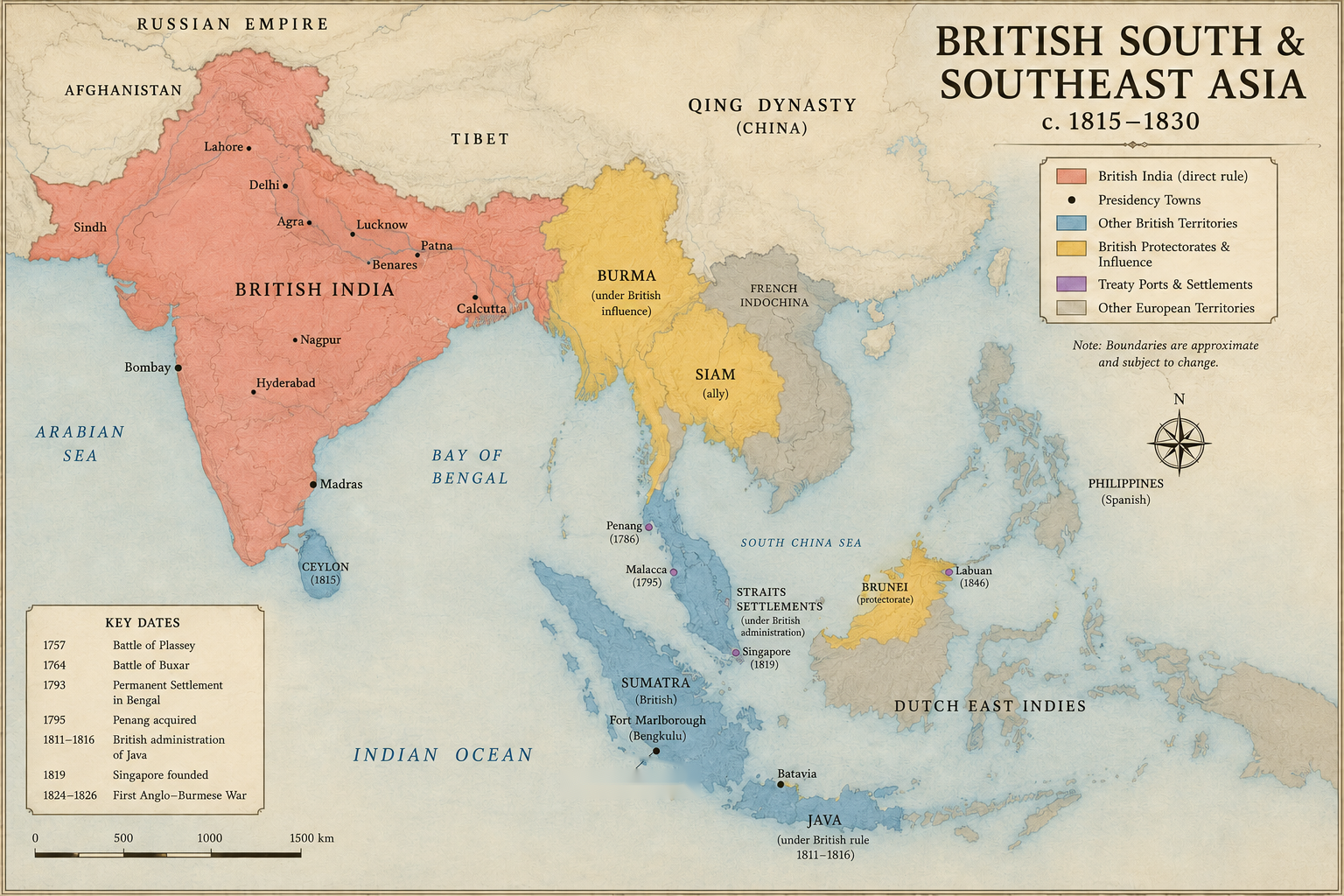
A map of Britain’s growing Asian empire from 1815-1830.
Bencoolen was one of the Company's oldest but least profitable possessions, held since 1685 almost entirely to secure a foothold in the pepper trade. It had earned a grim reputation among Company men as one of the unhealthiest postings in Asia. Mortality among its small European garrison from malaria and dysentery ran shockingly high, and a posting there was, for an ambitious young man without better connections, simply somewhere the Company sent those who had no one to speak for them.
Thomas’ work illustrates how Britain's Asian empire functioned long before the British Raj. During Thomas’ lifetime, India was not yet ruled directly by the British Crown. Instead, it was governed by the East India Company—a private corporation exercising enormous governmental powers.
Civil servants such as Thomas represented a new class of imperial administrators who combined commercial management with governmental responsibilities. Their duties blurred the lines between business and statecraft, reflecting the Company's unique constitutional position.

Pepper plants.
Thomas rose slowly through this marginal outpost's hierarchy over the next two decades. By 1815 he was working as a pepper surveyor at Moco Moco (now Mukomuko), inspecting the crop that justified Bencoolen's existence. By the early 1820s he had moved into warehouse administration back at the fort itself.
In between, in March 1805, Thomas married Elizabeth May Lewis, a fifteen-year-old Eurasian woman born at Fort Marlborough to a British Captain of Artillery in the Bengal Army and a Sumatran mother.
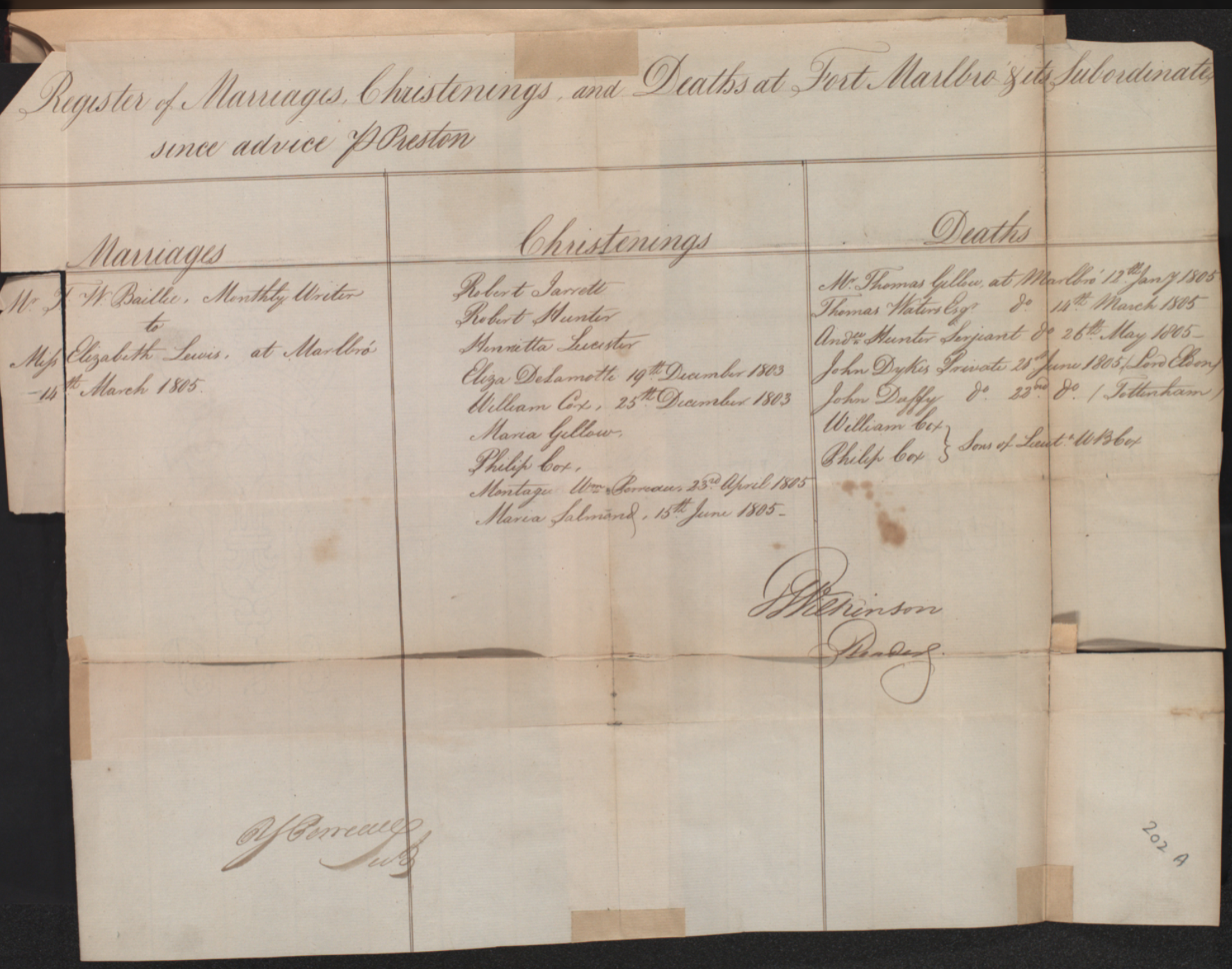
Marriage record of Thomas William Baillie and Elizabeth Lewis.
In such a small European and Eurasian community, colonial marriages were necessarily contracted young and close to home, given how few eligible partners were available at such a remote station.
The couple had three children in Sumatra before Elizabeth died in 1815, aged twenty-five, leaving Thomas a widower in his late twenties in one of the Company's most isolated settlements.
The most vivid episode of Thomas's life places him squarely inside a much larger geopolitical drama. In 1818 he was posted with a token force of six soldiers to Samanka Bay in southern Sumatra. There he was under direct orders from Thomas Stamford Raffles, the Lieutenant-Governor of Bencoolen, to plant and hold the British flag against Dutch claims.
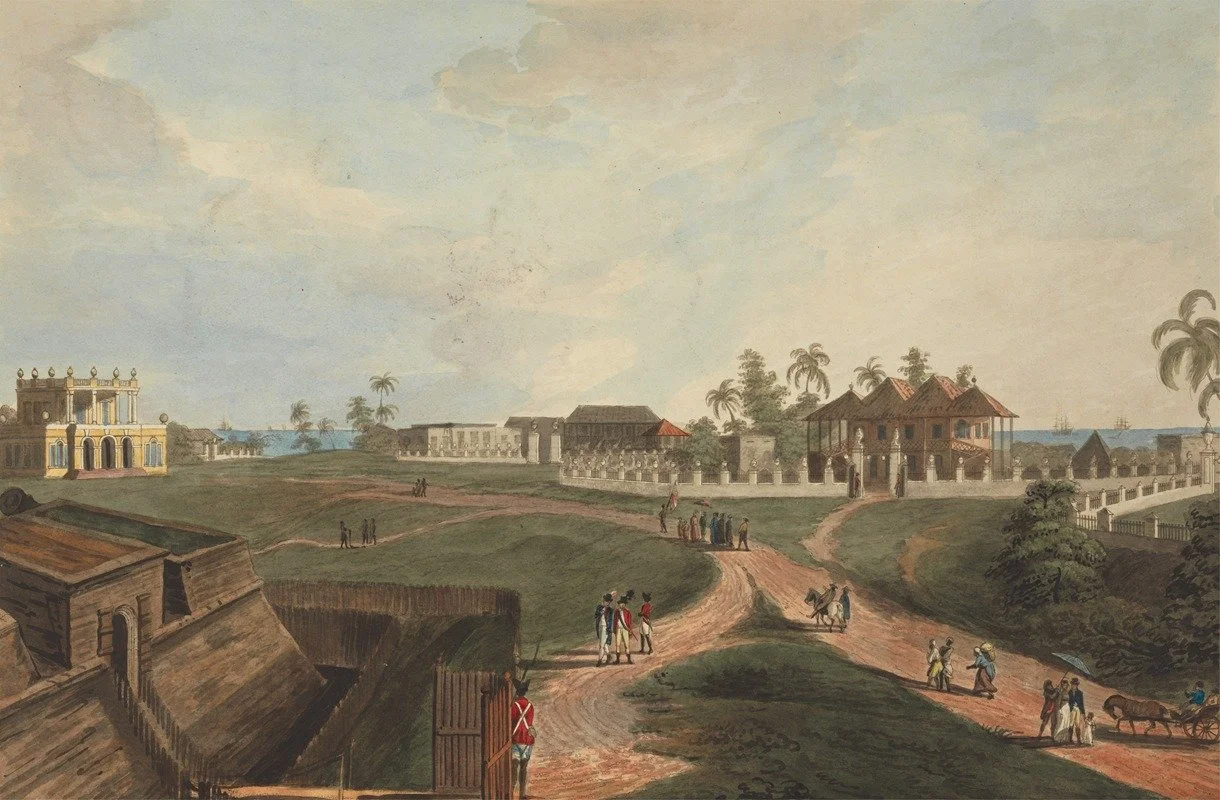
Fort Marlborough, Bencoolen, 1799, Joseph Constantine Stadler.
This was one small move in Raffles's broader campaign in the years immediately following Napoleon's defeat. His plan was to secure a permanent British anchorage somewhere in the Sunda Strait before the resurgent Dutch, whose East Indies possessions had just been restored to them by treaty, could close off the region entirely.
Thomas held his post and refused to lower the flag, exactly as ordered—until London itself overruled Raffles and forced the scheme's abandonment. It's a striking image: a minor Company clerk, backed by half a dozen soldiers, standing on principle over a stretch of Sumatran coastline because two European empires were quietly racing to carve up the strait between them.
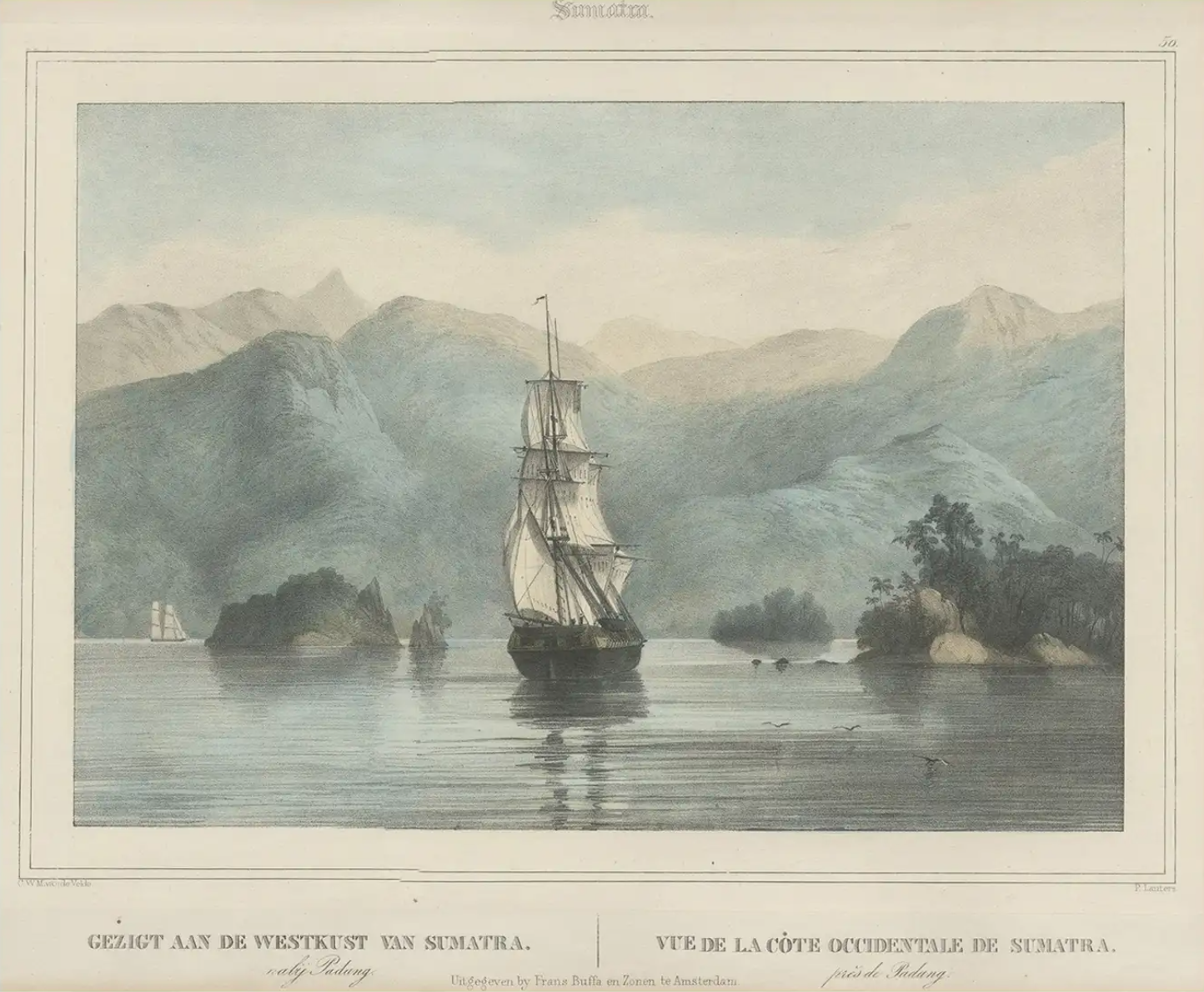
Western Sumatra.
Raffles's ambitions were not abandoned. Within a year he had turned his attention to a small island further north called Singapore; In 1919 he founded the settlement there that would eventually eclipse Bencoolen entirely.
By 1825 Britain formally ceded Bencoolen to the Dutch under the Anglo-Dutch Treaty of 1824, trading it for Dutch Malacca—meaning the very outpost where Thomas had spent his entire working life would, within a few years of his last documented record in 1823, cease to be British at all.
Thomas William Baillie's own life after that disappears entirely from the record, his death date and place unknown. His daughter Eliza Emma (Baillie) Lidiard married in Calcutta in 1849, so she made it out of Fort Marlborough eventually. But whatever became of Thomas William Baillie remains unknown.

The gate at Fort Marlborough today.