Lucy Falconbridge Cooper: Larceny & a One-Way Ticket to Hobart Town (c.1802-1835?)
Second great grandmother of Mark Stephens Whitty.
Lucy Falconbridge (the surname also appears as Faulconbridge) was born on 14 November 1802 and baptized at Allesley, a parish just northwest of Coventry in Warwickshire. She was the daughter of Joseph Faulconbridge and Hannah Standbridge Faulconbridge.
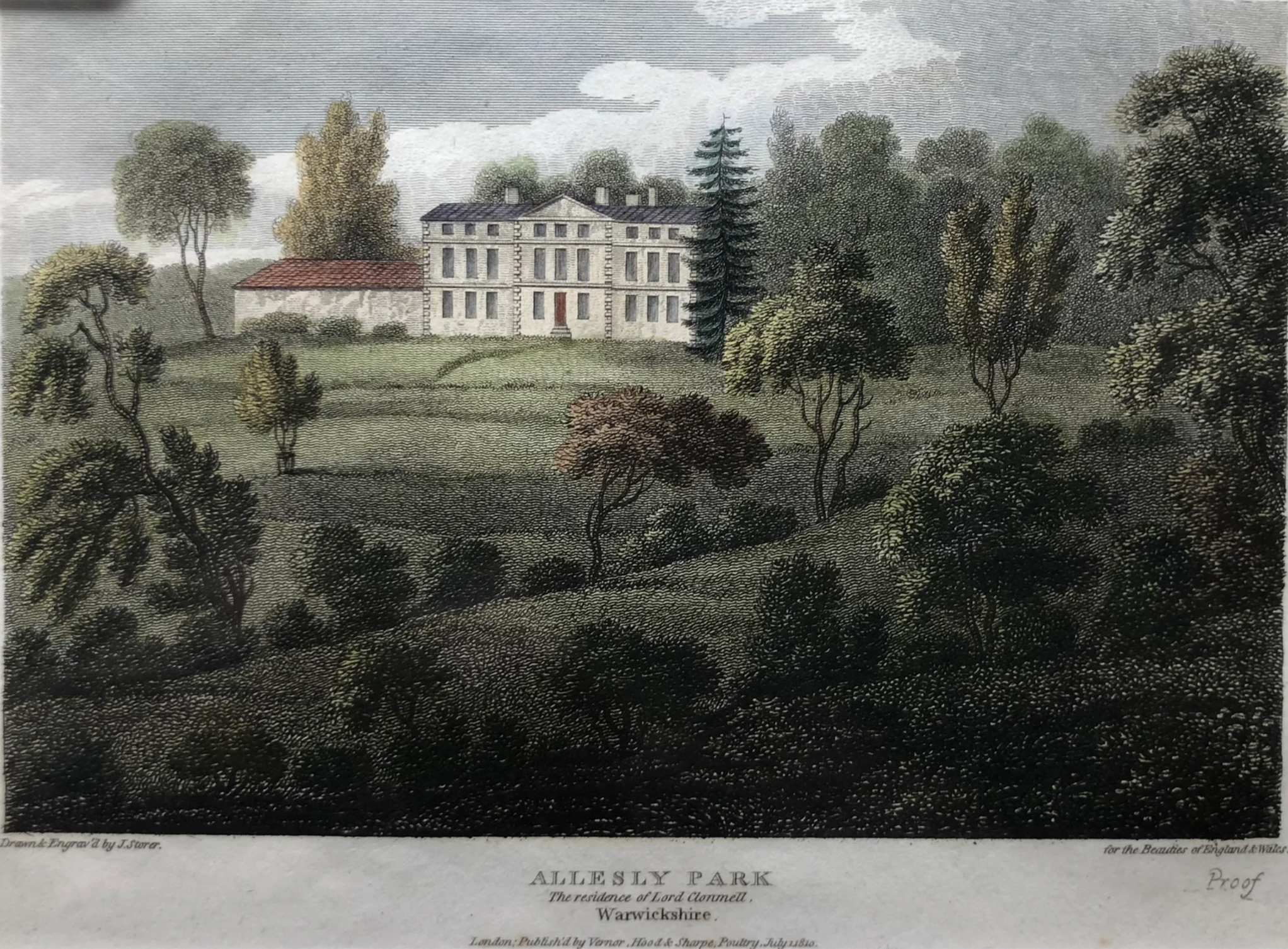
Allesley Park, Warwickshire, engraved by J. Storer.
Allesley sat at the edge of one of the Midlands' great cottage industries. Coventry and its surrounding parishes, including nearby Foleshill, were by this period deeply tied to ribbon weaving, a trade that employed thousands of working families on handlooms in their own homes and cottages.
Like so much of England's textile economy in the early nineteenth century, this home industry was becoming increasingly precarious as mechanization and market swings squeezed the smaller weavers into poverty.
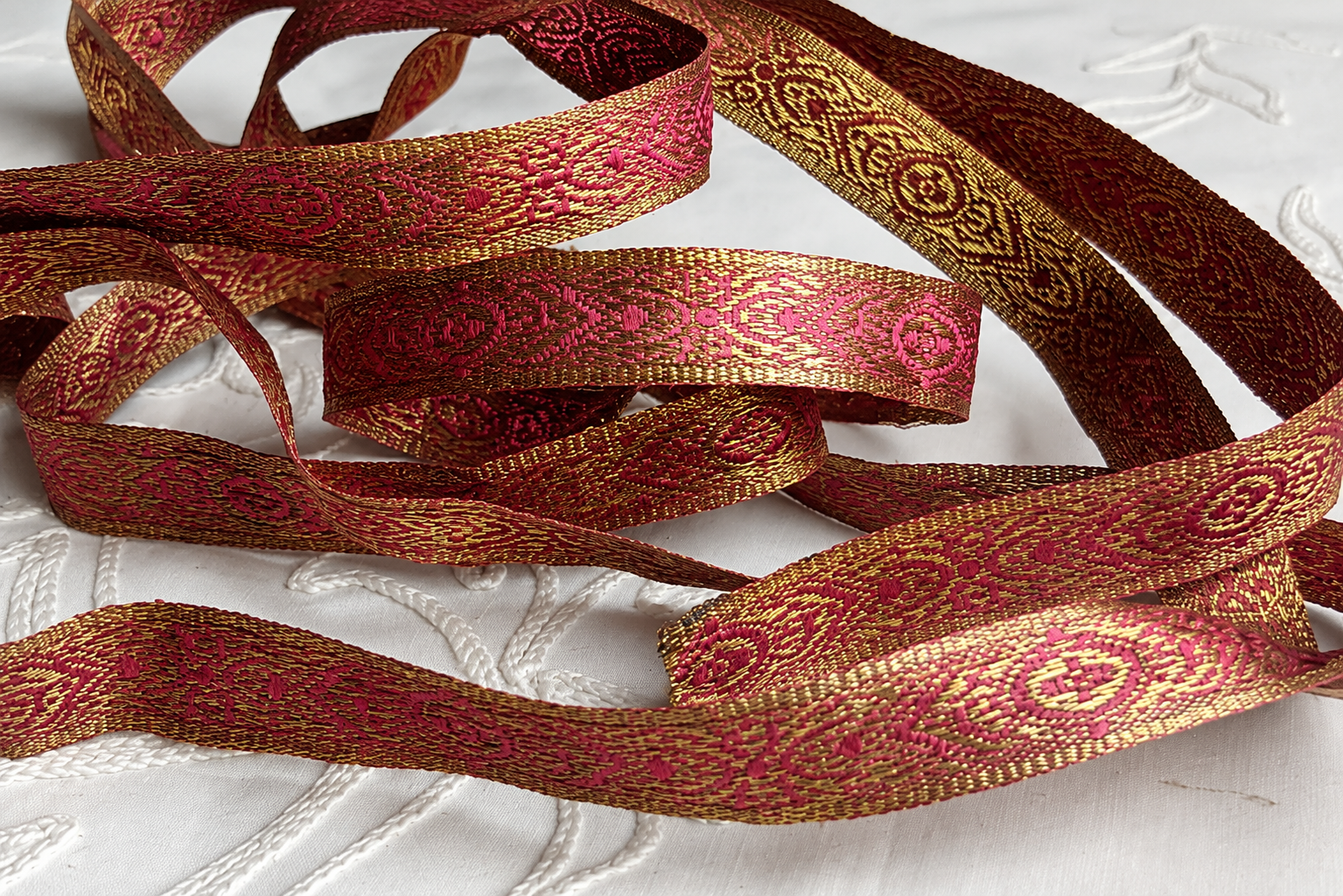
Antique silk ribbon.
Lucy's own path through this world was not an easy one. In 1819 at age just sixteen or seventeen she was convicted of larceny at the Warwick Assizes and sentenced to three months' imprisonment.
This first brush with the law was typical of the petty theft charges that filled Georgian courtrooms, often driven by simple hunger or economic desperation rather than any hardened criminality.
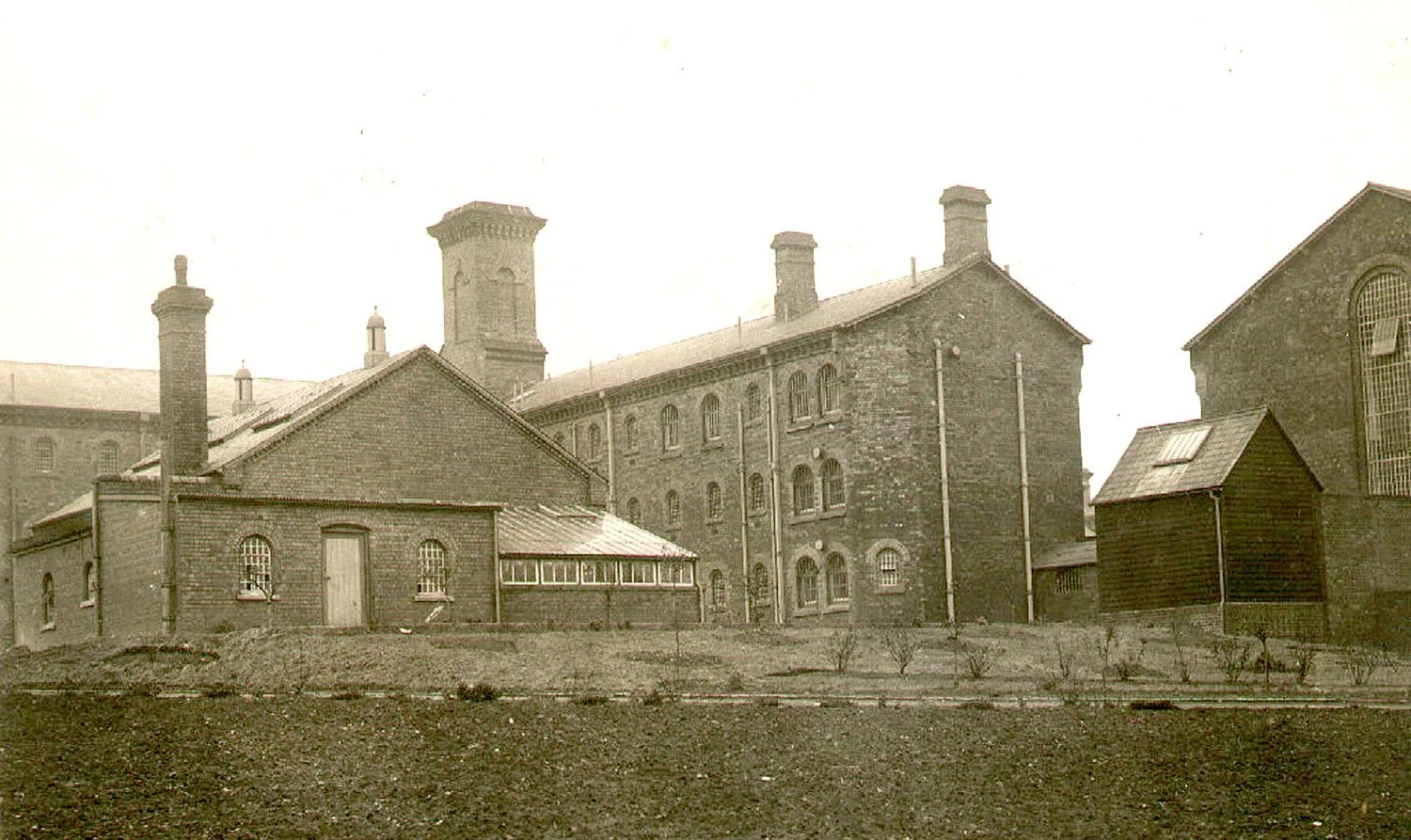
Warwick Gaol, Warwickshire, where Lucy was likely imprisoned at least twice.
Sadly it did not end there. In January 1823 Lucy was tried again for larceny in Warwickshire, and this time the sentence was transportation.
She departed England on 3 June 1823 aboard the convict ship Mary, arriving in Hobart Town, Van Diemen's Land, on 18 October 1823, after 137 days—or four-and-a-half months—at sea. She was barely twenty years old and a very long way from the ribbon-weaving parishes of home that she would never see again.
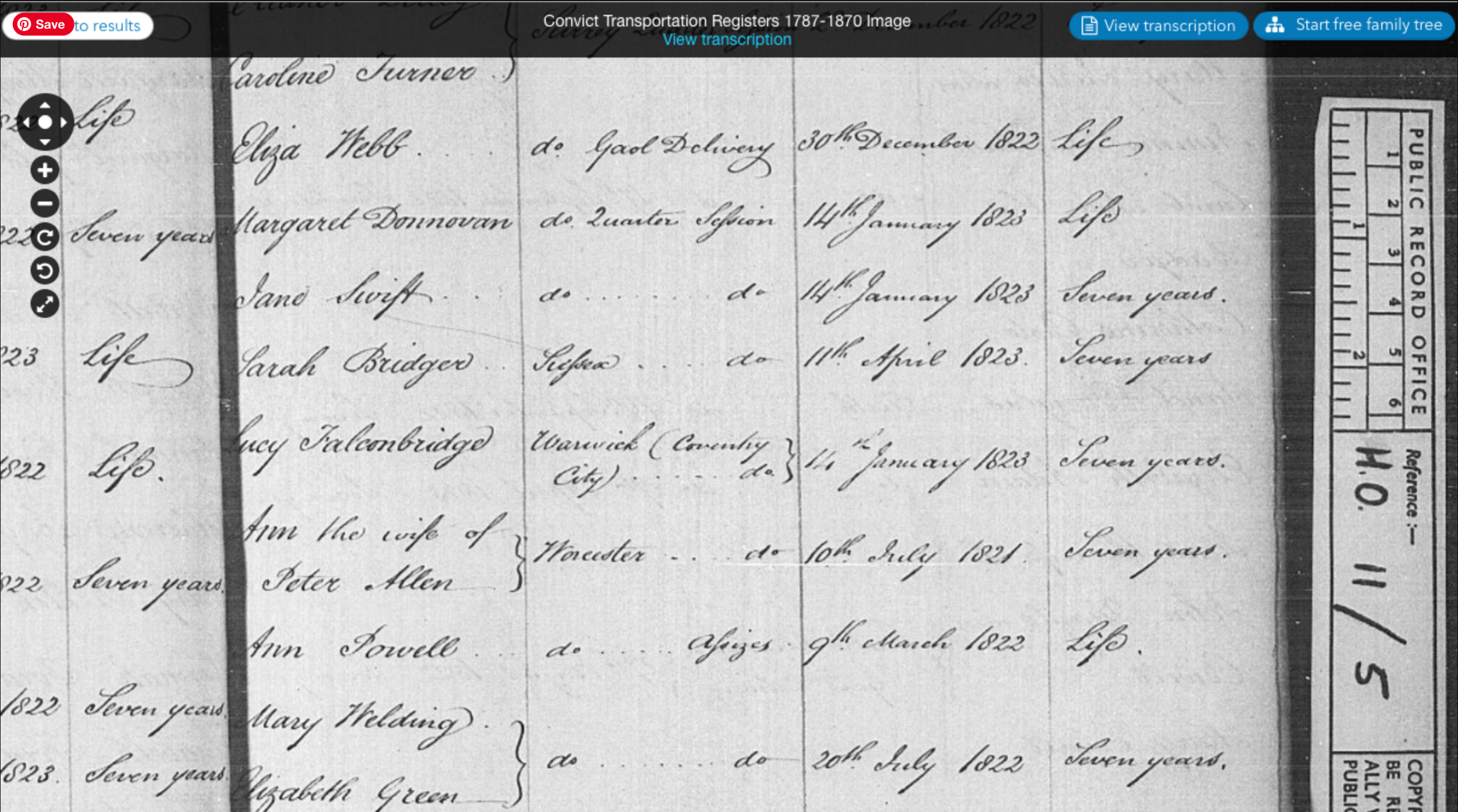
Lucy Falconbridge Convict Transport Register.
In the colony, Lucy's life soon intersected with another transported convict: John Cooper, a Salford calico printer turned Hobart constable. Their daughter Emma was born in 1825, a year before before the couple's formal marriage. This sequence of events was not unusual among convict couples, since permission to marry in the penal colony required official approval that could take time to secure.
Lucy and John married on 16 January 1826 at St David's, Hobart, and went on to have six children together: Emma, Charles John, James, Joseph Thomas, Lucy, and William Henry Cooper, all born in Hobart across the following decade. (William Henry, born in 1832, would grow up to marry Elizabeth Petworth, who was not a convict but was definitely a lawbreaker.)
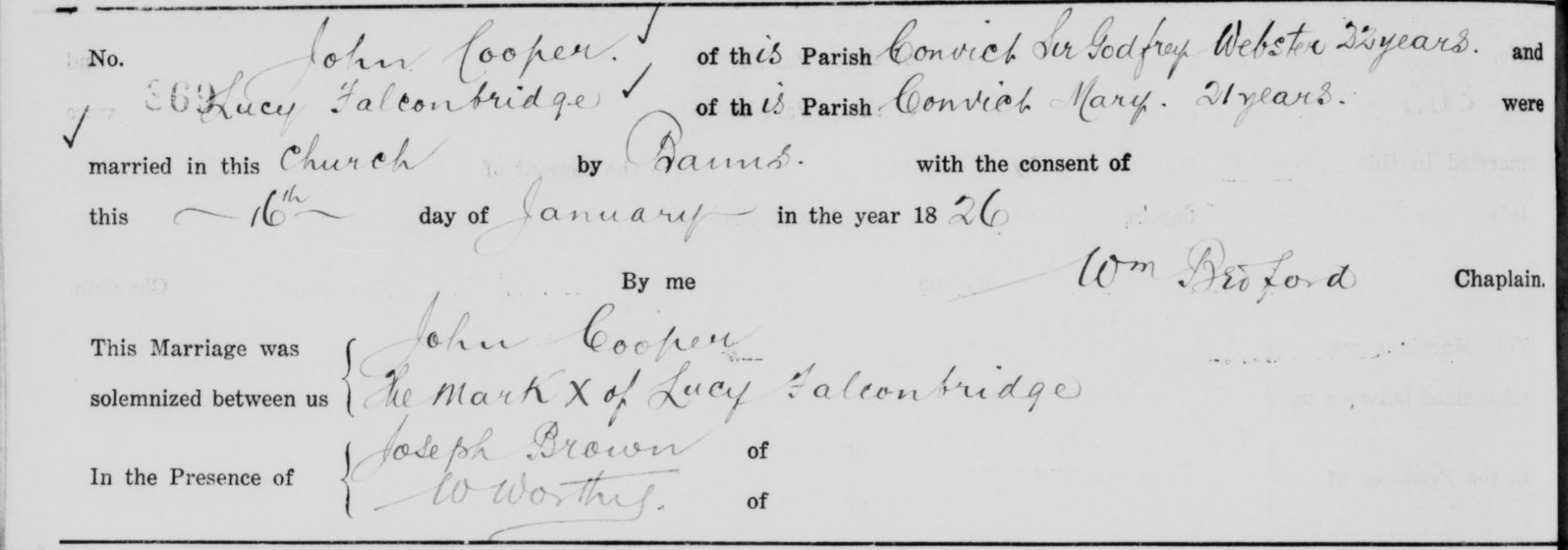
Lucy Falconbridge and John Cooper’s marriage record.
Colonial life for Lucy comes into brief, vivid focus in a newspaper account of a neighborhood dispute. Lucy Cooper was charged with assaulting a neighbor, Margaret McManus, after what the report dryly describes as ‘a sort of water party:’
“Lucy Cooper was charged with assaulting Margaret McManus. The ladies are neighbours, and formed a sort of water party by throwing the liquid over each others palings—but it appeared nothing could cool their fury, and they had a neck and neck race to the Police-office. Margaret arrived first, and to get the start of Lucy, where they blowed each other up great style. The case was dismissed to Margaret’s loss of 15s. 6d.”
Lucy may have lost the footrace—though not the fine—due to her pregnancy with her last child at the time.
It’s not clear when Lucy died. Her youngest daughter, also named Lucy, died at seven months old in March 1835. Did Lucy die then too, the fact of their same names somehow getting mixed up or lost in the records?
At any rate Lucy Falconbridge Cooper had no more children after baby Lucy, and hence may have died about age thirty-two. Her husband John Cooper would go on to live until 1888, spending well over fifty years as a widower, and dying at about age eighty-three at the Pauper’s Establishment in New Town.
A genealogical footnote to Lucy’s story is that she was a first cousin to Sir Henry Parkes, the towering nineteenth-century Australian statesman remembered today as the ‘Father of Federation’ for his role in pushing the Australian colonies toward political union, culminating in the Commonwealth that was formed in 1901. He served five terms as Premier of New South Wales.
That two first cousins from ordinary Warwickshire stock could see their lives diverge so completely—one arriving in Australia in chains as a convicted teenager, the other arriving free and rising to become one of the most celebrated founding figures in the nation's political history—is a small, sharp illustration of just how differently the same family's fortunes could unfold in this era. Lucy and Henry’s lives were shaped as much by chance as by circumstance, and by the accident of which side of the law they found themselves on. Along with uniting the colonies into a country, Sir Henry lobbied hard throughout his political life in Australia for the end of convict transport. Did he campaign with his cousin Lucy in mind?
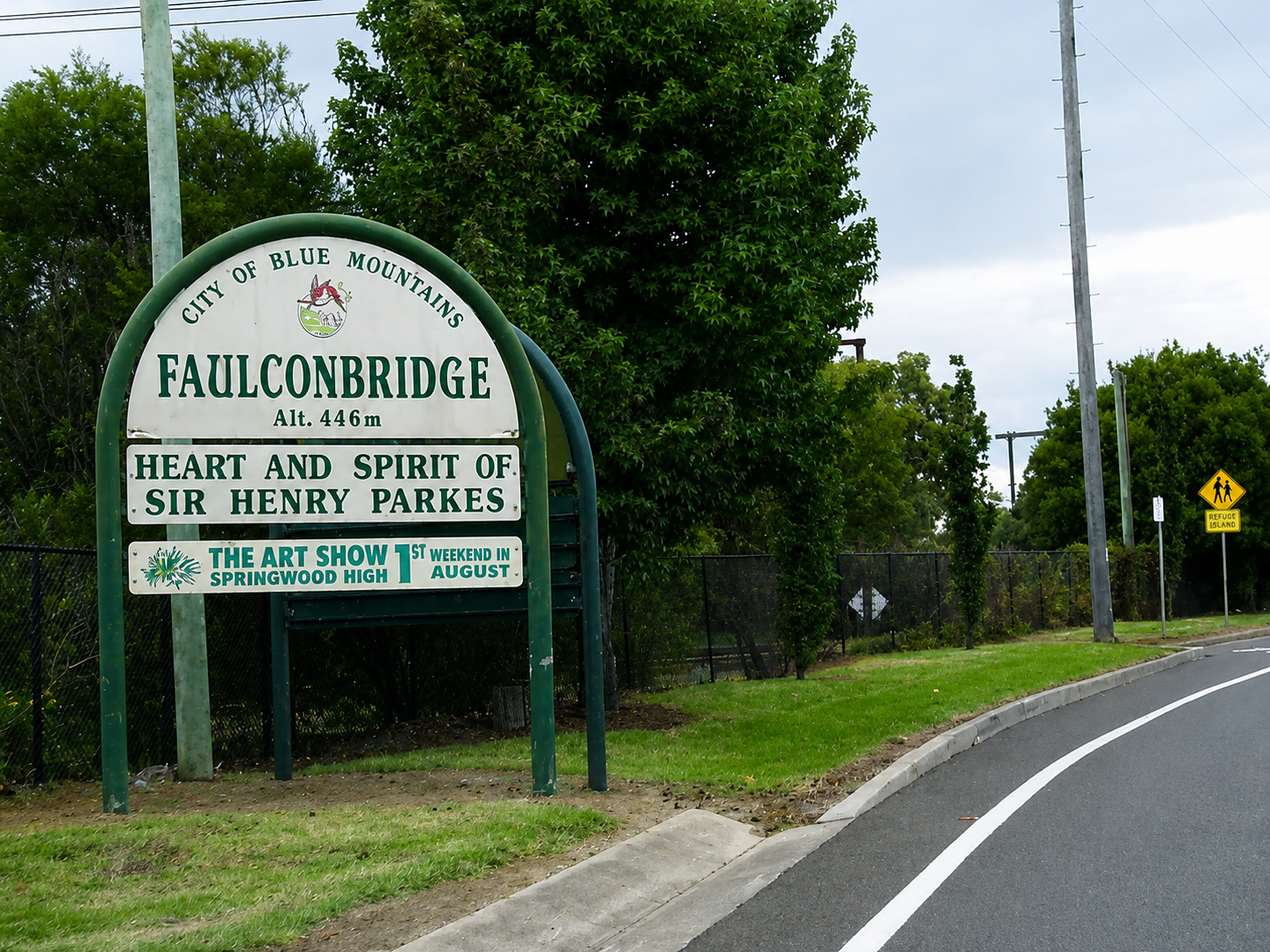
The town of Faulconbridge, New South Wales, where Sir Henry Parkes settled and which he named after his mother’s maiden name. Sir Henry’s mother and Lucy’s father were siblings.