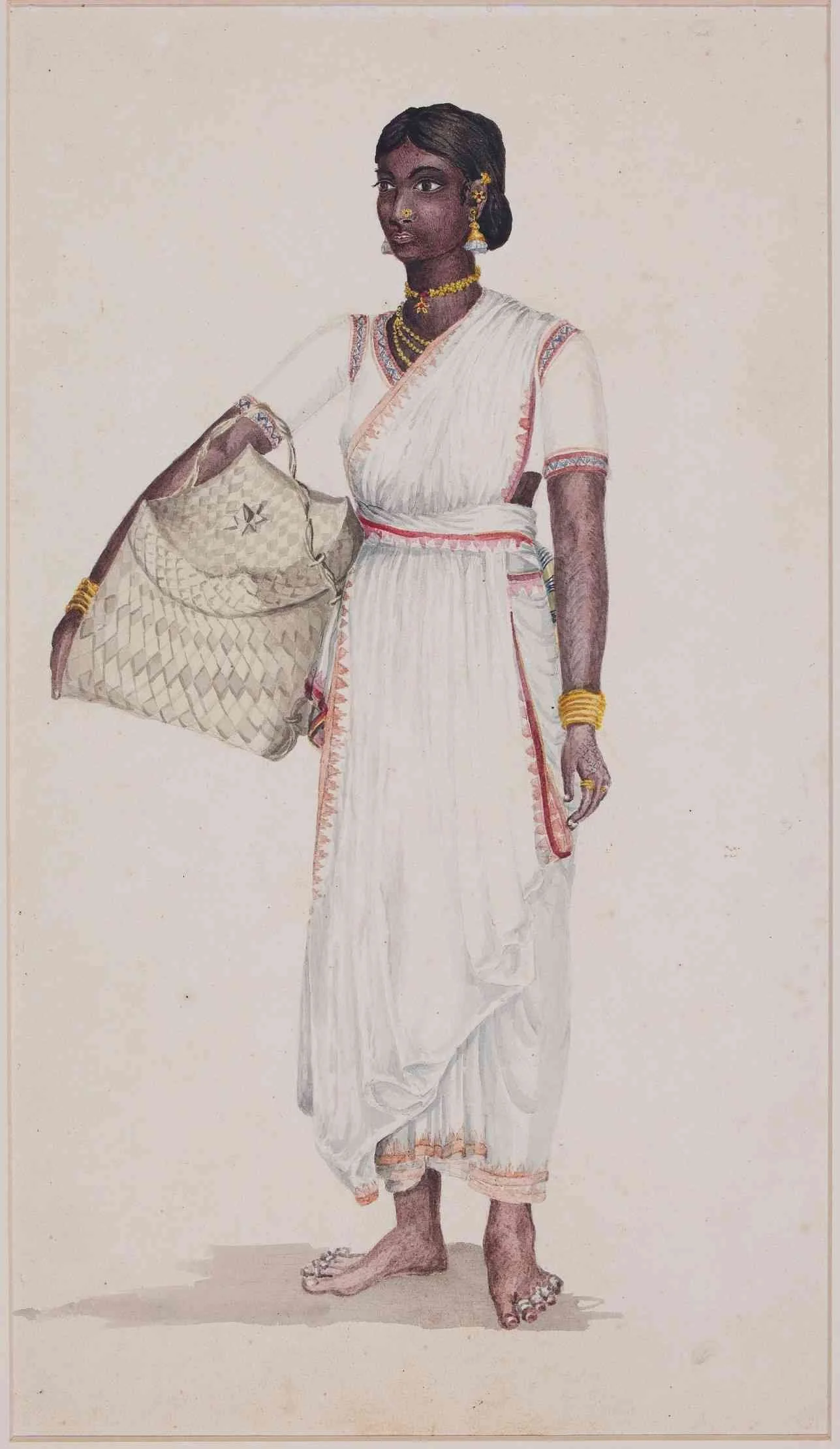
Maria ‘Unknown’: A Life of Silence in Black Town (c.1796- ?)
Third great grandmother to Patience Jewell Whitty
Nearly everything about Maria has been lost. The only surviving artifact of her life—aside from her descendants—is a single record drawn from an official document in the baptismal register of Black Town Chapel, Madras, India. Dated 9 November 1814, it records the baptism of the infant John Edward Price, who is described on paper as:
“...the Son of ____________ Father unknown, and Maria, a deaf and dumb Native...”
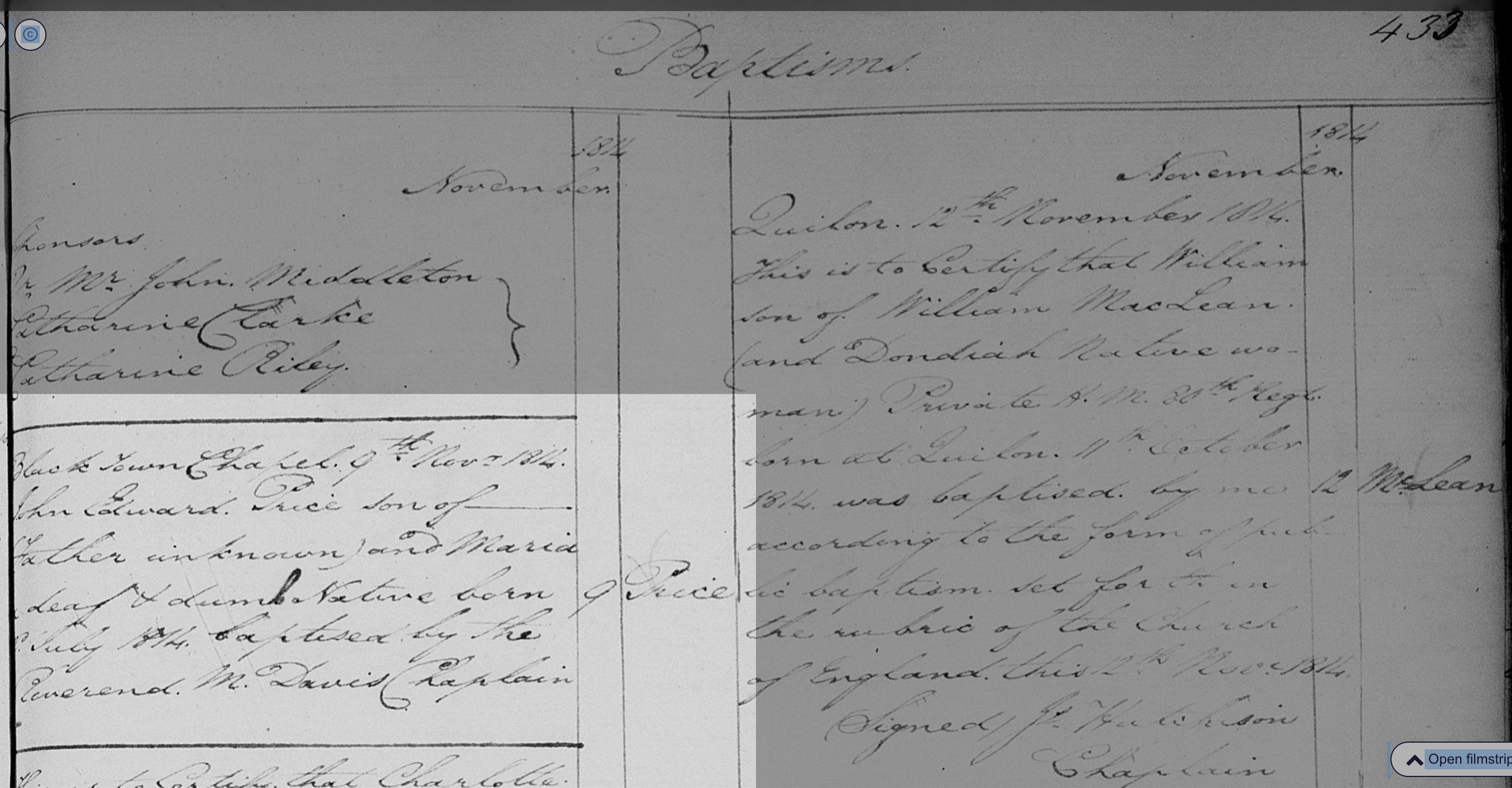
The birth record of John Edward Price, in the lighter-colored quadrant, from 1814 in Black Town, Madras, which reveals his unnamed father and his mother as ‘Maria, a deaf and dumb Native.’
This is the only known record of Maria’s life. And since she was not able to speak for herself then, all we can do now is try to imagine the possibilities of who she might have been.
We know that she may have been born around 1796 and that she baptised a son a week after he was born in 1814. And that is the whole of what survives of Maria—no surname, no caste, no community, no death date. Everything else about her life has to be inferred from the world she lived in rather than read directly off the page.
That world was Black Town, the densely populated quarter that grew up immediately north of Fort St. George where the East India Company established its Madras settlement in 1639.
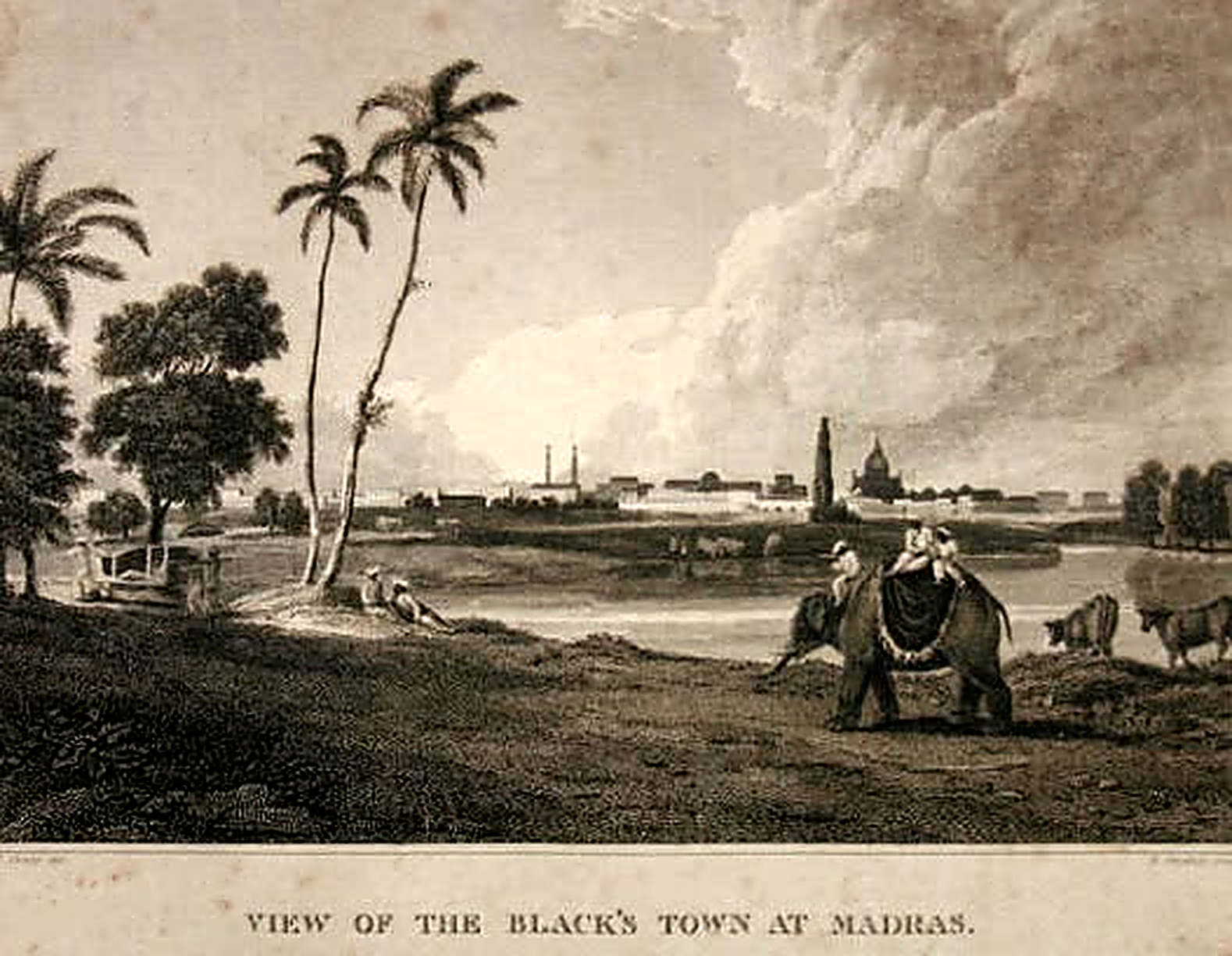
Black Town, Madras, 1814.
Unlike the fortified White Town reserved for Europeans inside Fort St George, Black Town was by design a mixed and crowded township, home to Eurasians, Tamil Hindus of every caste, Muslim merchants, and to a substantial population of Indian Christians, including Portuguese-descended Catholics and, further north around Vepery, a Tamil Protestant community that had grown steadily since Lutheran and Anglican missionaries began working there in the 1720s.
It was also, from its very founding, a service economy: barbers, washermen, boatmen, and above all domestic servants lived in Black Town precisely because their labor sustained the households of the white Europeans inside Fort St. George.
Women who worked as ayahs (live-in nursemaids), nurses, and household servants in British Madras homes were disproportionately drawn from specific communities, particularly the Paraiyar community, a group later classified among India's Scheduled Castes, and among those historically excluded from orthodox Hindu temple worship and landholding.
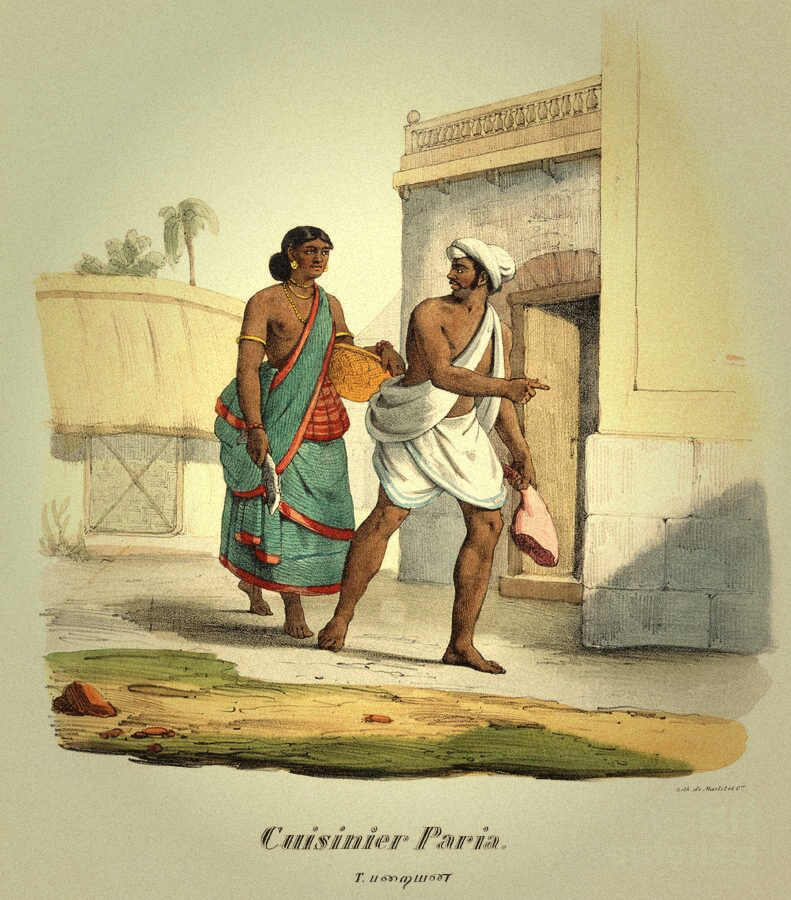
Paraiyar cooks, 1827-35, Me Burnouf. Paraiyar—from which comes the English word ‘pariah’—was a name for tribal and Indigenous people outside the caste system in Southern India.
For that reason Paraiyar people were more often receptive to the Catholic missionaries of the Portuguese era and to the Protestant missionaries centered at Vepery. These offered baptism, literacy, and a measure of social standing unavailable within the rigid caste hierarchy of India.
Maria was likely a Christian, as evidenced by the fact her son John Edward Price was baptized a Christian—although an English father could have insisted on baptism regardless of the mother's own faith. Most likely Maria was a Paraiyar Christian tied to the Vepery mission or to one of Black Town's Catholic congregations.
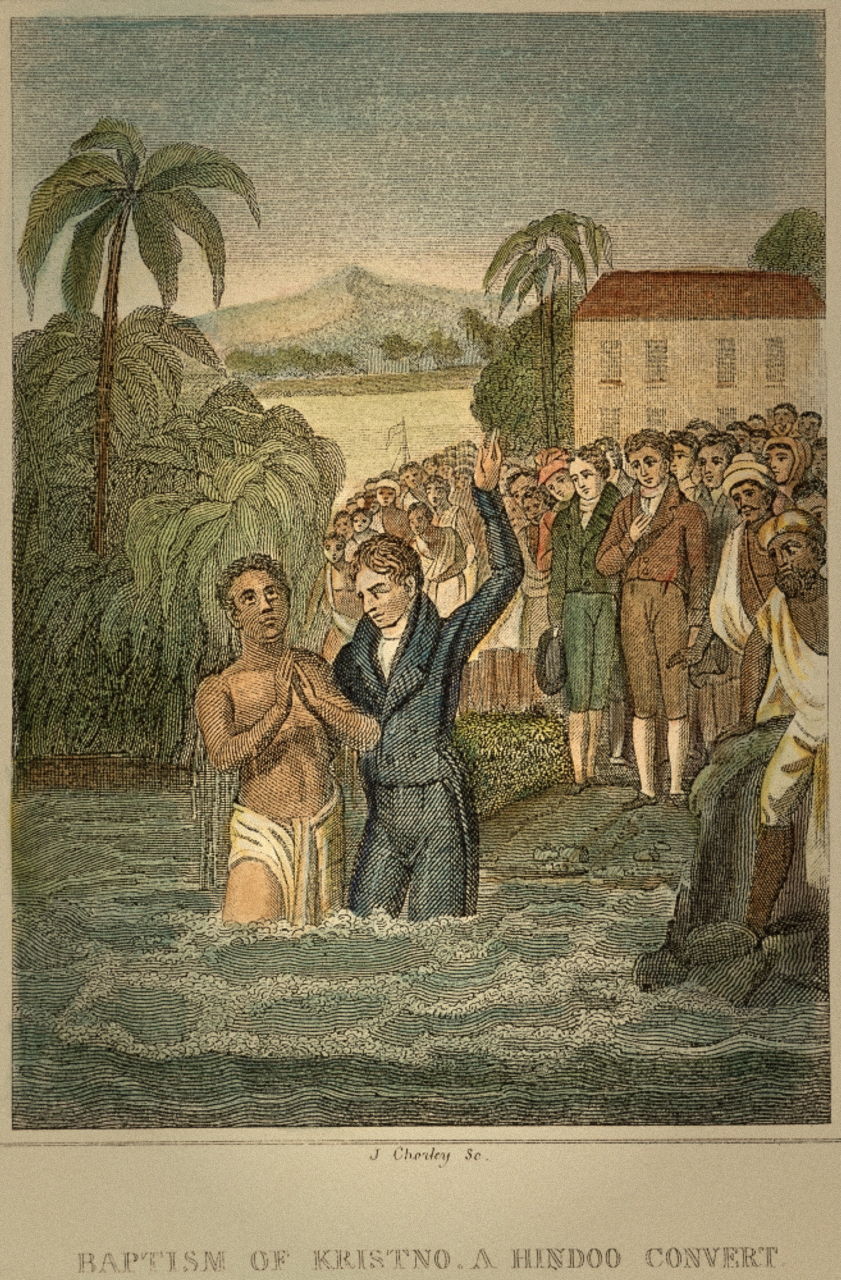
Baptism in India, 19th century.
Maria’s disability—she was both deaf and nonspeaking—adds another layer to her mystery. In 1814, no school for the deaf existed anywhere in India and the first would not open in Bombay until decades later. So Maria would have grown up entirely without formal sign language instruction, communicating instead through whatever informal home signs and gestures her family and community had developed around her.
That kind of upbringing typically depended on a stable, tightly bound family or caste network willing to interpret and advocate for a deaf and nonspeaking child. So was Maria living in silent isolation, or was she embedded in a specific community that had, in effect, adapted to her?
That same silence may explain what the record leaves unsaid about John Edward Price’s father. The baptismal register lists him too as ‘unknown.’ Yet genealogical evidence connects John Edward Price to Edward Price, a Briton and Head Accountant at the Madras Mint. At the time John was born, Edward had already been married for five, childless years to Harriet Temasfield, a presumably Eurasian or European woman.
And so Maria, a deaf woman with no formal means of dictating testimony to a clerk, and likely employed as a domestic servant to—or dependent in some other unequal way on—a socially prominent British man, would have had no avenue to compel an unwilling father's acknowledgment. Her disability would only have compounded the ordinary powerlessness that already governed relationships between European men and Indian women.
That Maria’s son was nonetheless baptized and given a prominent name may have been part of what compelled Edward Price to acknowledge the only son he ever had. Because he did eventually help his Eurasian boy to an equally prominent position in the Madras Mint.
And when, decades later, the time came, the son was buried beside his father—under a shared headstone, with an almost identical inscription—with only six years separating their deaths.
As to what became of Maria, either after the birth of her son, or perhaps after she lost her position and possibly her home in the Price household, that likely sad story is lost forever.