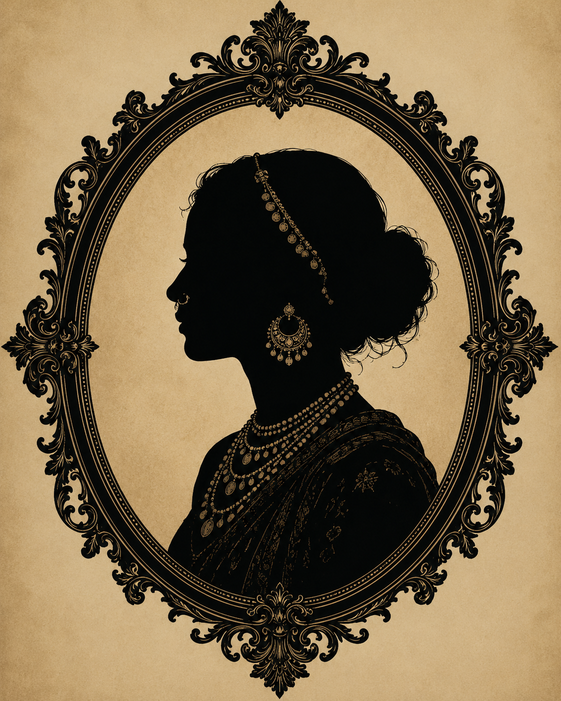
Mitochondrial DNA: The Unbroken Thread of the Ancient Mothers (50,000 years ago to the present)
What is Mitochondrial DNA?
The vast majority of DNA in our bodies sits in the nucleus of every cell and is shuffled anew at every generation, half from each parent. But a much smaller amount lives inside the mitochondria, the cell's energy-producing organelles. Mitochondria were once independent, free-living bacteria that were engulfed by ancestral eukaryotic cells billions of years ago.
Mitochondrial DNA (mtDNA) follows an entirely different rule of inheritance. It passes essentially unchanged from mother to child, generation after generation. The mitochondria contributed by sperm at fertilization are virtually always destroyed, leaving the egg's mitochondria as the only ones transmitted forward.
A son carries his mother's mtDNA for his entire life but cannot pass it on. Only daughters carry it into the next generation—if they have children. The result is a single, unbroken thread running mother to daughter to daughter, largely untouched by the genetic shuffling that reshapes every other part of the genome.
This makes mtDNA one of the few tools that can trace a specific, provable maternal line across centuries and millennia, rather than the wider, blurrier web of ancestry that ordinary DNA testing reveals. Just as most surnames are inherited from fathers, mitochondrial DNA is the genetic surname of the mothers, far more ancient than any human naming customs.

Mitochondrial DNA is the small circular chromosome found inside mitochondria. These organelles, found in most eukaryotic cells, are the powerhouse of the cell. The mitochondria, and thus mitochondrial DNA, are passed exclusively from mother to offspring through the egg cell.
M42b1a3a—From the Ancient Foremothers of India
The mitochondrial DNA carried down this exact line to Patience Jewell Whitty is currently identified as haplogroup M42b1a3a, which sits deep within macro-haplogroup M—the great maternal lineage that dominates South Asian mtDNA and traces back to some of the earliest human populations to settle the Indian subcontinent after the migration out of Africa.
The parent branch of m42b1a3a, M42, is itself notably ancient, estimated to the late Upper Paleolithic or early Holocene—roughly 24,000-18,000 years ago. Today it appears mainly among indigenous and tribal populations scattered across India, rather than in the general caste-based population, suggesting a lineage that has persisted in relative isolation in particular communities for a very long time.
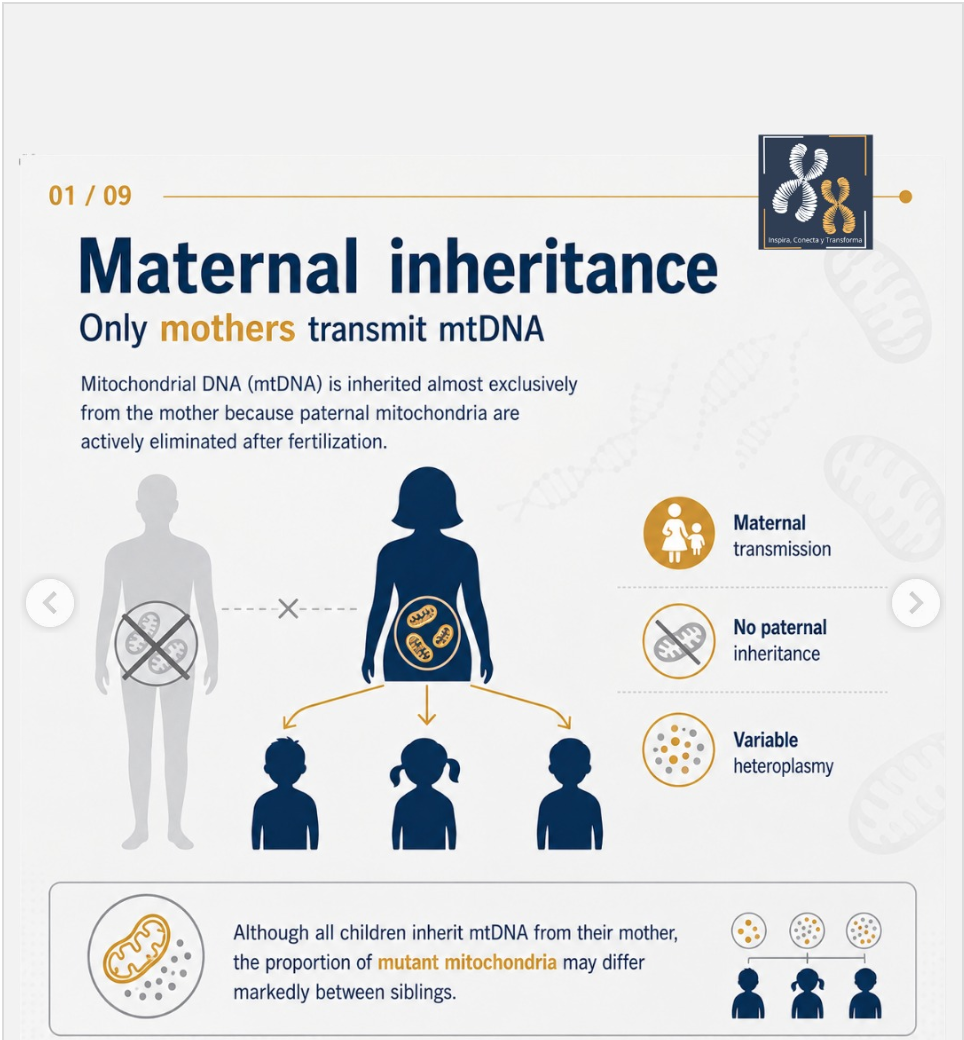
Mitochindrial DNA.
India’s Adivasi—’Original Inhabitants’—Arrived in the Subcontinent 50,000-65,000 years Ago
India's Adivasi—the term "Adivasi" itself means ‘original inhabitants’ in Sanskrit—are tribal populations across the subcontinent that preserve ancient genetic signatures which have been diluted or replaced in most other Indian communities through millennia of migrations and admixture.
India’s tribal populations represent one of the most genetically fascinating human groups on the planet. Comprising over 104 million people across more than 700 officially recognized tribes, these indigenous communities carry DNA lineages that stretch back tens of thousands of years—some among the oldest continuous genetic lineages found anywhere in the world.
The Ancient Ancestral South Indian (AASI) DNA represents the deepest known genetic layer in South Asia. This ancestry traces back to the earliest modern humans who migrated out of Africa and settled in the Indian subcontinent approximately 65,000-50,000 years ago.
.png)
Young Irula girl from the Nilgiri Hills, 1906. Irula people carry 72-80% Ancient Ancestral South Indian (AASI) genetics, among the highest on Mainland South Asia.
Genetic studies consistently show that Indian tribal populations carry the highest proportions of Ancient Ancestral South Indian ancestry found on mainland India—often exceeding 70-80%. This makes them the closest living mainland relatives to the first humans who settled South Asia. Some tribal groups have maintained genetic isolation for thousands of years, preserving lineages found nowhere else on Earth.
The AASI lineage is distinct from all other global populations. It diverged from other out-of-Africa lineages very early in human dispersal history, meaning it represents a unique branch of the human family tree. The closest living approximation to ‘pure’ AASI ancestry is found in the Andaman Islands—specifically among the Onge and Jarawa peoples, who have remained almost completely isolated for tens of thousands of years. AASI linieages on mainland India include:
Irula (Tamil Nadu): Estimated 72-80% AASI ancestry, among the highest on the mainland. The Irula are a Dravidian-speaking tribal group of the Nilgiri Hills who traditionally lived as snake catchers and forest gatherers.
Paniya (Kerala): Approximately 70-78% AASI. The Paniya are one of the most ancient tribal communities in the Western Ghats, with oral traditions suggesting extremely long habitation of their current territory.
Chenchu (Andhra Pradesh/Telangana): Approximately 65-75% AASI. The Chenchu are semi-nomadic hunter-gatherers of the Nallamala Hills who have maintained remarkable cultural and genetic isolation.
Birhor (Jharkhand): Approximately 60-70% AASI. A small, formerly nomadic tribe of the Chota Nagpur Plateau.
Gond (Central India): Approximately 55-65% AASI. India's largest tribal group, the Gonds number over 13 million and span multiple states.
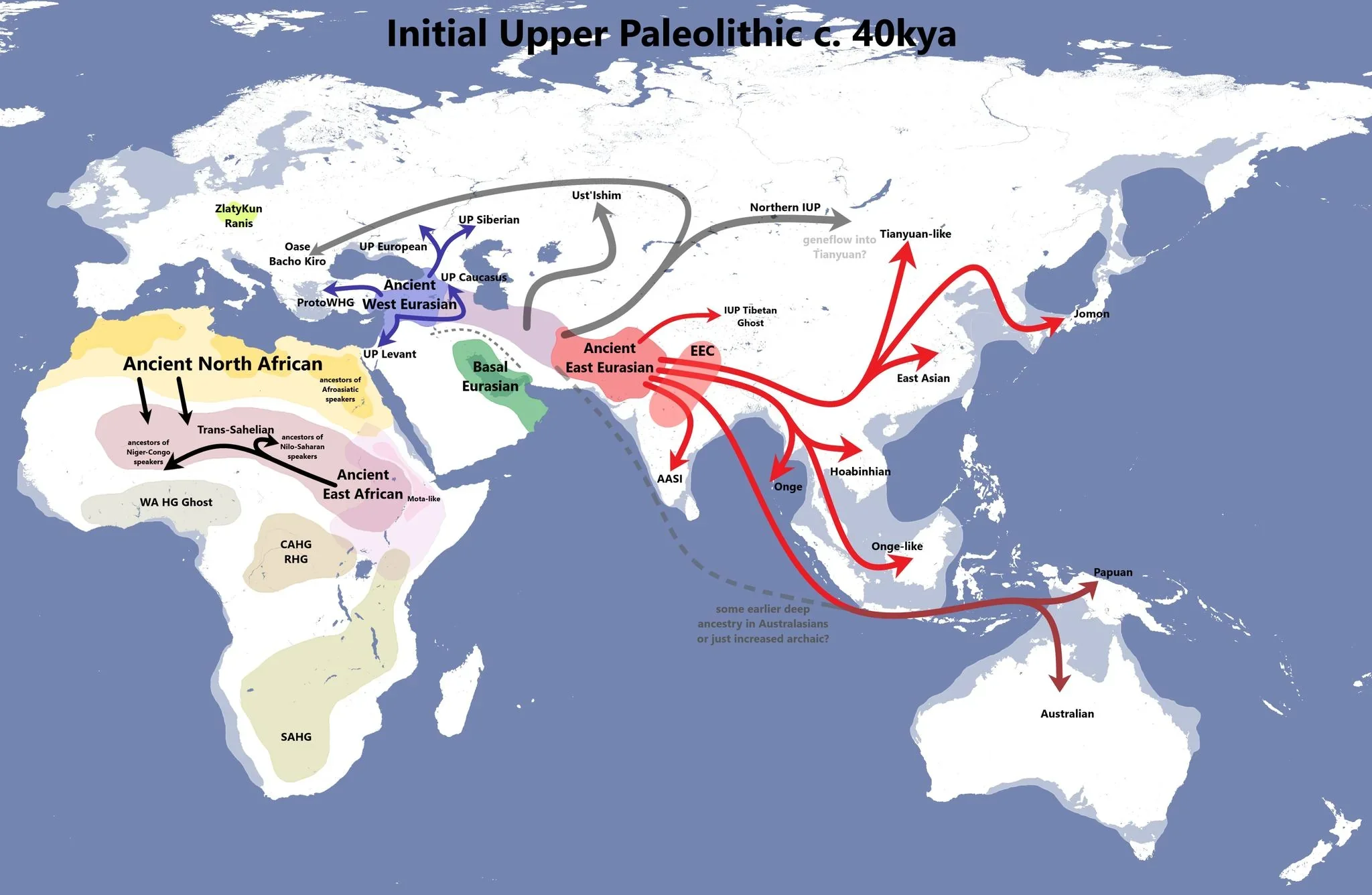
This map illustrates hypothesized human migration routes and lineage distributions around 40,000 years ago. It highlights the location of Basal Eurasians, a population situated in the now-sunken Persian Gulf. The map differentiates between Ancient West Eurasians and Ancient East Eurasians dispersal routes. It traces specific genetic trails, such as those related to AASI (Ancient Ancestral South Indians), Papuans, and Australians.
What is M42’s relationship to Australian Aboriginal mtDNA?
According to a 2017 Scientific Reports study on Aboriginal Australian mitochondrial genomes, M42b is the ‘sister clade’ to the Aboriginal Australian-specific M42a, as identified in tribal groups in southern India.
Sequencing 966 mitochondrial genomes across 26 ‘relic’ tribal populations of India, researchers found the relevant basal M42 markers concentrated in central Dravidian and Austro-Asiatic tribal groups—meaning tribes speaking Dravidian languages (a family that includes Gondi and related Central Indian languages) and Austro-Asiatic languages (the Munda language family, including the Santal, Ho, Munda, and related peoples of central and eastern India).
Neither paper names one single tribe as ‘the’ carrier of M42b. Instead the finding is at the level of a small number of individuals (seven, in the 2009 study) spread across multiple tribal populations in that central Dravidian/Munda-speaking belt of India, rather than concentrated in one named community. it's this scattered, low-frequency, deep-tribal distribution pattern that gave researchers confidence they'd found a real ancient marker linking South Asia and Aboriginal Australia rather than a coincidence.
M42b1a3a is therefore not only ancient and extremely rare, but one of only a tiny number of lineages in South Asia closely related to lineages of some Australian Aboriginal peoples.

Gondi Gussadi man of India at a Boli Cheto conference.
What Do We Know of Our Specific M42b1a3a Ancestors?
The mothers of the M42b1a3a line are recorded back in time for more than two centuries.
Patience (Jewell) Whitty was born 1928 in Calcutta, Bengal, India, two hundred years after the oldest grandmother on this line whose full name we know.
Working backward from her, Patience’s mother Julia Mary (Simcox) Jewell was born in 1903 in Asansol, Bengal.
Julia’s mother was Helena Charlotte (Eates) Simcox, a woman about whom little survives beyond her married name and the fact that her death, around 1906 in Asansol, left her daughter motherless around the age of three.
Helena's mother was Julia (Bromley) Eates, born in 1853 at Chunar, a garrison town on the Ganges near Mirzapur, the daughter of a Eurasian trumpeter in the Bengal Horse Artillery and his young Eurasian wife.
That wife was Rebecca (Williams) Keegan, born in 1827 at Neemuch, a British cantonment in central India.
Behind Rebecca stands the line's final, faintest link: her mother, known in the surviving record only as Anna, wife of a man named John Williams, and mother to at least four children born in the 1820s and 1830s in scattered garrison and district towns across the Bengal Presidency.
Who Was Anna? And Who Were All the Mothers Before Her?
Beyond Anna lie the Indian foremothers, older than colonialism, older than any India or any nation, older than even history, older even than settled agriculture, back into the unremembered past.
Might Anna have been a member of an Adivasi tribe of India? Or was her mother? Or hers? Somewhere back there is the mother from a remote tribal community in South Asia from whom hailed all the other foremothers carrying M42b1a3a. They may have lived in the same region for hundreds of generations.
Anna has no recorded surname, no birthplace, no death date. She is, in the strict genealogical sense ‘Unknown.’ And yet she is also, biologically, the oldest identifiable point on this particular mitochondrial thread: the earliest woman in the line whose existence can be documented at all.
This unbroken thread that leads back to Africa ends with Patience Jewell Whitty’s only daughter, who had no daughters, thereby marking the end of this particularly ancient line of Indigenous mothers, which will fade to a close in the 21st century,